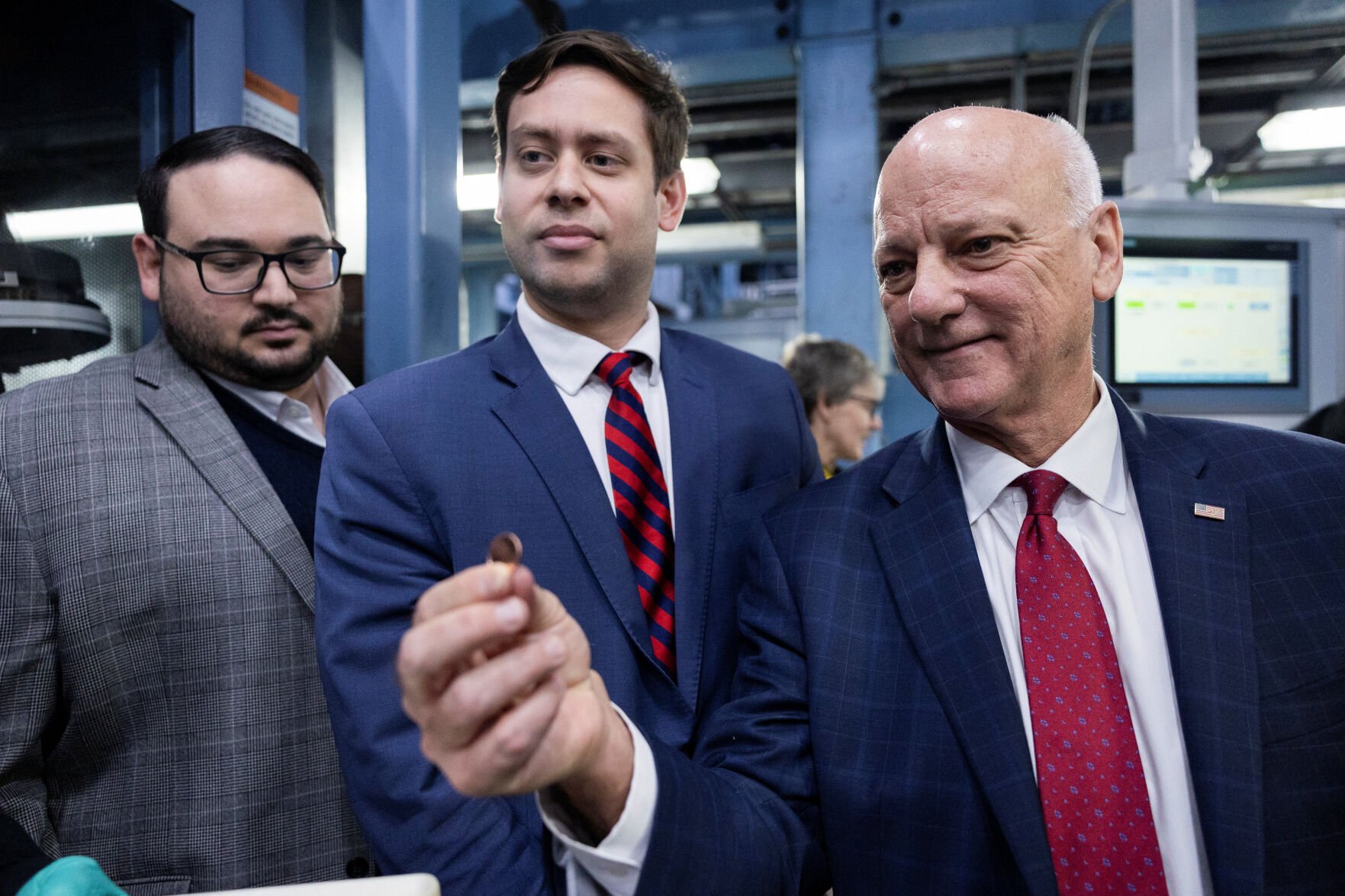
The U.S. Mint has ended production of the penny, a change made to save money and in recognition of the growing irrelevance of the 1-cent coin. The last pennies were struck Wednesday at the mint in Philadelphia, where the country's smallest denomination coins have been produced since 1793, a year after Congress passed the Coinage Act. President Donald Trump ordered the penny's demise as costs climbed to nearly 4 cents per penny and the 1-cent valuation became somewhat obsolete. Billions of pennies remain in circulation, but they are rarely essential for financial transactions in the 21st century economy.
The United States is experiencing a shortage of pennies after President Trump decided to stop their production earlier this year. Merchants across the country are struggling to provide exact change, and banks are rationing their remaining supply. Some retailers are even offering promotions to encourage customers to bring in pennies. The shortage began in late summer and is worsening as the holiday season approaches. While the government aims to save money by discontinuing the penny, the abrupt decision has left retailers and banks without guidance. A bill in Congress, the Common Cents Act, seeks to address some of the issues.
President Donald Trump has ordered the U.S. to stop minting pennies. His surprise announcement comes after decades of unsuccessful efforts to phase out the 1-cent coin. Advocates for ditching the penny cite its high production cost and limited utility. Fans of the penny cite its usefulness in charity drives and relative bargain in production costs compared with the nickel. Here's a look at some question surrounding Trump's order.