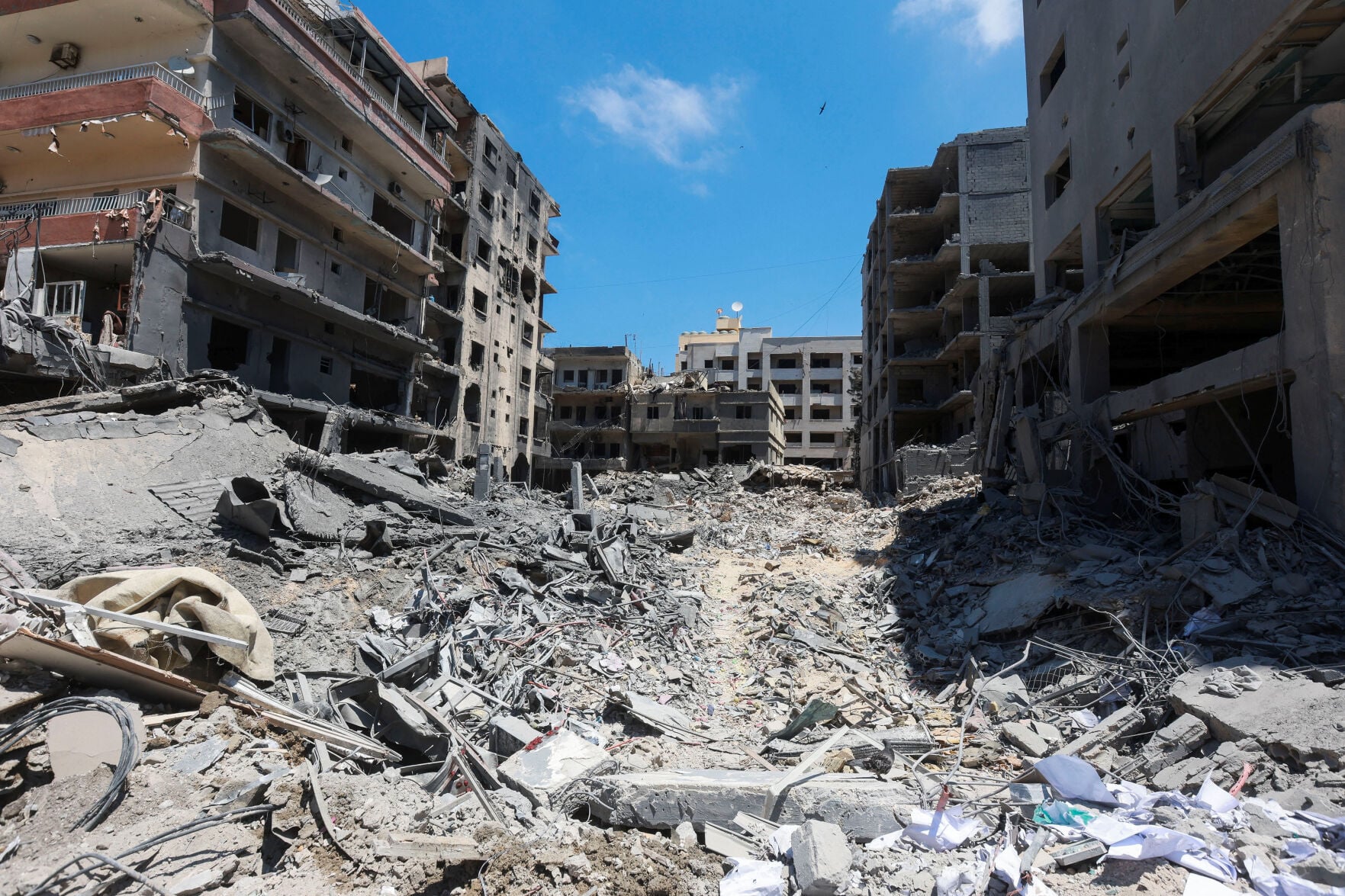
Ceasefires have been announced, often to great fanfare, in Gaza, Lebanon and Iran. But the fighting continues. In just the last few weeks, Israeli forces have captured more territory in Gaza and killed two top Hamas militants there, as well as more than a dozen other people. In Lebanon, Israeli troops captured a Crusader fortress over the weekend in their deepest incursion in 26 years, as Hezbollah kept up rocket fire. The fighting in Lebanon showed no sign of letting up on Tuesday, after U.S. President Donald Trump said both sides had agreed — again — to de-escalate. The United States and Iran have traded fire as they try to reach a more lasting truce.
By WAFAA SHURAFA, JULIA FRANKEL and SAMY MAGDY Associated Press
Updated
Israel says its troops retook part of a corridor that bisects Gaza, and its defense minister warned that attacks would intensify until Hamas frees dozens of hostages and gives up control of the territory. The military said Wednesday it had retaken part of the Netzarim Corridor that divides northern Gaza from the south. It had previously withdrawn from the area as part of a ceasefire that began in January. That truce was shattered Tuesday by Israeli airstrikes that the Gaza Health Ministry says killed more than 400 Palestinians, mostly women and children. The United Nations says one of its employees was killed in Gaza in an apparent strike on a guesthouse, though it was not immediately clear who was behind the strike.
By SARAH EL DEEB, FARNOUSH AMIRI, and TIA GOLDENBERG Associated Press
The Israeli military says a top Hezbollah official who had been widely expected to be the group's next leader was killed in an Israeli airstrike in southern Beirut in early October. Earlier on Tuesday the Israeli military leveled a building in a suburb of Beirut that it said housed Hezbollah "facilities," sending smoke and debris into the air a few hundred meters from where a spokesperson for the militant group had just briefed journalists about a weekend drone attack that damaged the Israeli prime minister's house. Also on Tuesday U.S. Secretary of State Antony Blinken met with Israeli Prime Minister Benjamin Netanyahu. Blinken aims to revive cease-fire efforts after last week's killing of Hamas leader Yahya Sinwar.
By ABBY SEWELL and NATALIE MELZER Associated Press
The Israeli military says it killed a top Hezbollah commander as part of a two-day bombing campaign that has left more than 560 people dead and prompted thousands in southern Lebanon to seek refuge from the widening conflict. With the two sides on the brink of all-out war, Hezbollah launched dozens of rockets into Israel on Tuesday, targeting an explosives factory and sending families into bomb shelters. Families that fled southern Lebanon flocked to Beirut and the coastal city of Sidon, sleeping in schools turned into shelters, as well as in cars, parks and along the beach.
The Israeli military says it has confirmed that the head of Hamas' military wing was killed in an airstrike in Gaza in July. The announcement about Mohammed Deif comes a day after the assassination of Hamas' political chief in an airstrike in Iran. The killings have left U.S., Qatari and Egyptian mediators scrambling to salvage talks for a cease-fire deal in Gaza, even as international officials try to avert an all-out regional war. Hamas had no immediate comment on Israel's announcement of Deif's death. The militant group had previously said he survived the airstrike.