

The United Nations weather agency said carbon dioxide levels in the atmosphere reached record highs last year, intensifying climate change and extreme weather. The World Meteorological Organization said CO2 growth rates have tripled since the 1960s, reaching levels that existed 800,000 years ago. The report, released Wednesday, highlights emissions from coal, oil, and gas, along with wildfires, as major contributors. Despite flat fossil fuel emissions last year, CO2 levels continue to rise. The agency has urged policymakers to reduce emissions, warning that the world is heading into a dangerous state. Other greenhouse gases like methane and nitrous oxide have also hit record levels.

Scientists are criticizing two key documents from the Trump administration that challenge the idea that climate change endangers the public. The documents from the Environmental Protection Agency and Department of Energy argue that climate change's impact is unclear and that U.S. cuts to greenhouse gas emissions have little global effect. Most of the scientists who responded to questions from The Associated Press said the reports misuse or misinterpret their work. A common critique was that the documents cherry-pick information to downplay climate change's severity. When asked to grade the documents, those surveyed most frequently gave the work an F.

Hurricane Erin never made landfall, but it left behind rough ocean conditions along the U.S. East Coast. At least two people have died, a 17-year-old boy in New Hampshire and a 59-year-old man in New York, after they went swimming in heavy current. A search continued Monday for a man who was missing after his boat capsized off of Salisbury Beach in Massachusetts on Saturday. The teen was pulled away by a strong ocean current off of Hampton Beach. The man was swimming at Sailors Haven in the Fire Island National Seashore. Forecasters say there are no coastal watches or warnings for newly formed Tropical Storm Juliette in the Pacific Ocean and Tropical Storm Fernand in the Atlantic.

A startup called Gigablue claims to have reached a milestone by selling 200,000 carbon credits for its ocean-based carbon capture technology. The company says its patented particles grow algae that trap carbon dioxide, which then sinks to the ocean floor. Outside scientists, however, question the effectiveness and environmental impact of this method, citing a lack of public data and concerns about marine ecosystems. Gigablue has conducted trials in New Zealand and plans to expand operations. While some buyers trust the company's promises, experts remain skeptical about its unproven technology and the broader implications of such ocean-based carbon removal efforts.

Scientists say human-caused climate change added an average of 41 days of dangerous heat worldwide in 2024. The analysis from World Weather Attribution and Climate Central comes after a year likely to be the world's hottest on record. The heat scorched everywhere from cities in North America to West Africa to the Acropolis in Greece and even South and Southeast Asian countries. Some areas saw 150 days or more of extreme heat due to climate change. The scientists also said that climate change worsened much of the world's damaging weather throughout the year.
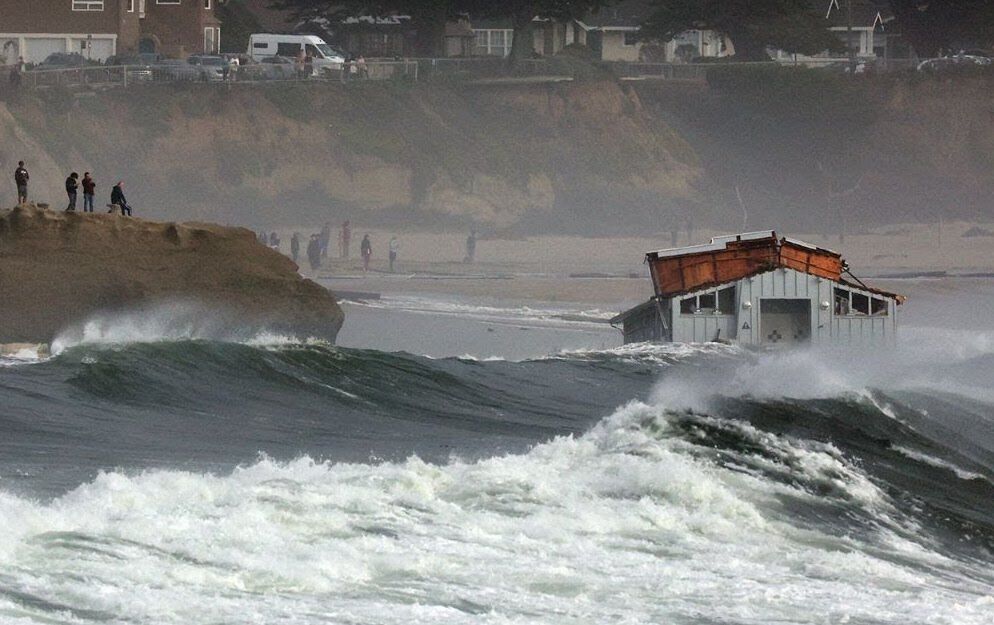
Persistent high surf and flooding threats along California's coast have residents on high alert a day after a major storm was blamed for one man's death and the partial collapse of a pier. The National Weather Service on Christmas Eve warned of dangerous, large-breaking waves of up to 35 feet. Its latest high surf warning will be in effect until 6 p.m. Tuesday. Some California cities had ordered beachfront homes and hotels to evacuate early Monday afternoon as forecasters warned that storm swells would continue to increase throughout the day.

The San Mateo County Harbor District is exploring the possibility of opening an ocean science and research center, beginning with a survey eva…

NOAA's Climate Prediction Center reports there is a 60% chance that a weak La Nina will develop this autumn and could last until March. La Nina is part of a natural climate cycle that can cause extreme weather across the planet. Northern parts of South America could see more rain than usual. Southern regions of the U.S. and parts of Mexico could be drier than average. The northern tier of the U.S. and southern Canada could be wetter than average.

In the gateway to the Arctic, fat and sea ice are crucial, intertwined and dwindling. And scientists say because of that polar bears are in trouble. In Churchill, Canada, the polar bear capital of the world, scientists say there are now about half the polar bears as there were 40 years ago. Polar bears are losing sea ice that they use as a base for seal hunting, so they are going hungry longer in the summer. Even tiny plankton, the base of the food web, is going low fat. And that's bad for the region because fat is crucial for survival here.


