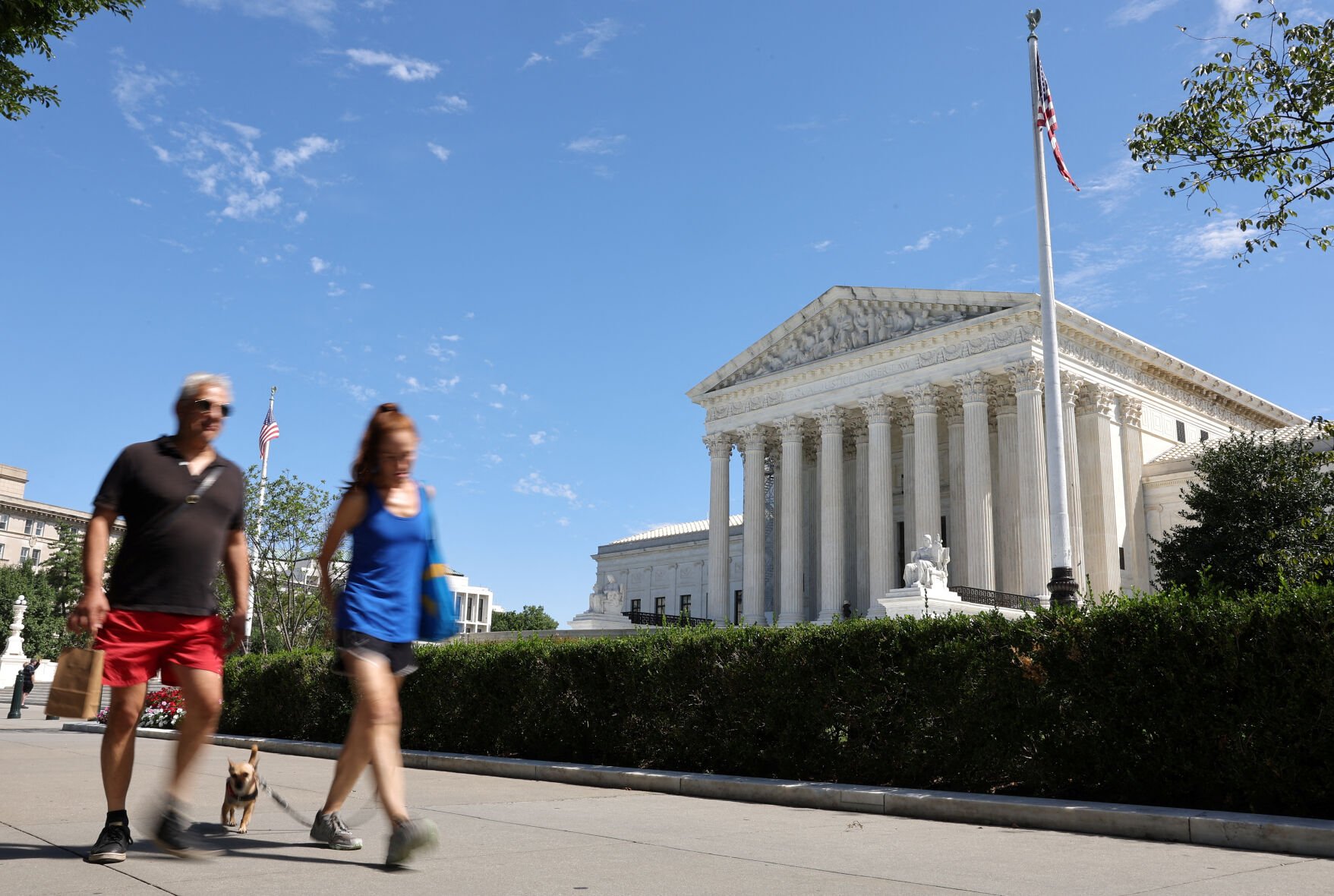
A unanimous Supreme Court has made it easier to bring lawsuits over so-called reverse discrimination, siding with an Ohio woman who claims she didn't get a job and was demoted because she's straight. The justices' decision Thursday affects lawsuits in 20 states and the District of Columbia where, until now, courts had set a higher bar when members of a majority group, including those who are white and heterosexual, sue for discrimination under federal law. The court ruled in an appeal from Marlean Ames, who's worked for the Ohio Department of Youth Services for years. Justice Ketanji Brown Jackson says federal civil rights law draws no distinction between members of majority and minority groups.
A split Supreme Court has rejected a pair of gun rights cases, though one conservative justice predicts the court will soon consider whether assault weapons bans are constitutional. The majority did not explain its reasoning in turning down the cases over high-capacity magazines and guns like the AR-15, which are popular weapons that have also been used in mass shootings. Justice Brett Kavanaugh indicated Monday he's skeptical that the bans are constitutional and said he expects the court to return to the issue soon. The decisions in cases from Maryland and Rhode Island come three years after the high court handed down a landmark ruling that expanded Second Amendment rights.
The Supreme Court has upheld a tax on foreign income over a challenge backed by business and anti-regulatory interests. The court on Thursday declined their invitation to weigh in on a broader, never-enacted tax on wealth. The justices left in place a provision of a 2017 tax law expected to generate $340 billion, mainly from foreign subsidiaries of domestic corporations that parked money abroad to shield it from U.S. taxes. The law was passed by a Republican Congress and signed by then-President Donald Trump. The case attracted outsize attention because it might have led to a decision dooming a wealth tax.