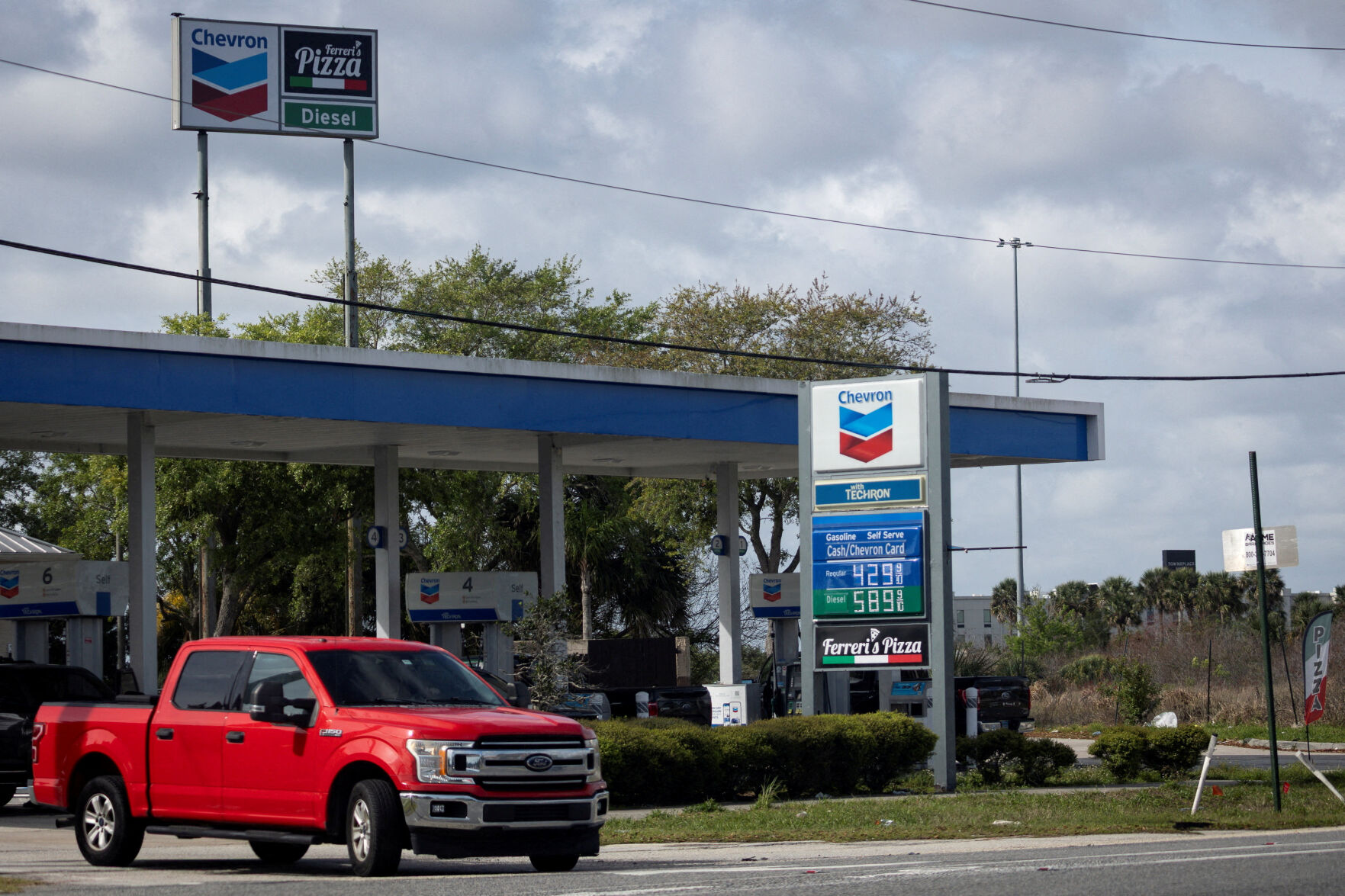
U.S. producer prices climbed last month at the fastest pace since November 2022, fueled by surging energy prices. The Labor Department reported Thursday that its producer price index — which captures inflation before it reaches consumers — jumped 6.5% from May 2025. It also rose 1.1% from April, same as it did the previous month. Inflationary pressures, intensified by the energy shock caused by the Iran war, are frustrating Americans five months before midterm elections that will determine whether President Donald Trump's Republicans keep full control of Congress.
Rising gas prices pushed inflation to its highest level in three years last month, a headache for the Federal Reserve and a potential political challenge for the Trump administration as midterm elections near. New data showed Wednesday that consumer prices rose 4.2% in May from a year earlier, the third straight monthly increase. Prices have now risen faster than wages for several months. Families are dipping into savings to maintain their spending, and more people are falling behind on their credit card bills. Large retailers say they have also noticed changes in customer behavior, like buying smaller amounts of gas during visits to the pump.
The average long-term U.S. mortgage rate eased this week from its highest level in nine months, welcome relief for prospective homebuyers. Mortgage buyer Freddie Mac said Thursday that the benchmark 30-year fixed rate mortgage rate fell to 6.48% from 6.53% last week. The average rate remains below 6.85%, where it was a year ago. When mortgage rates decline they give homebuyers more purchasing power. Mortgage rates are influenced by several factors, from the Federal Reserve's interest rate policy decisions to bond market investors' expectations for the economy and inflation.
U.S. consumer prices climbed a sharply again last month as the 10-week war with Iran pushed energy prices higher. The Labor Department reported Tuesday that its consumer price index rose 3.8% from April 2025. On a month-to-month basis, April prices were up 0.6% from March as gasoline prices rose 5.4%. Excluding volatile food and energy costs, so-called consumer core prices were up 0.4% last month from March and 2.8% from April 2025, relatively modest readings that suggest the energy price burst isn't yet spilling over much into other prices.
Jerome Powell plans to remain on the board of the Federal Reserve after his term as chair ends next month "for an undetermined period of time," saying the "unprecedented" legal attacks by the Trump administration have put the independence of the nation's central bank at risk. The Fed Wednesday left its benchmark interest rate unchanged for the third straight meeting but signaled it could still cut rates in the coming months, moves that attracted the most dissents since October 1992. The Senate Banking Committee earlier approved Powell's successor as chair, Trump appointee Kevin Warsh, on a party-line vote.
U.S. consumer confidence rose modestly in April despite growing anxiety over soaring energy prices brought on by the war in Iran. The Conference Board said Tuesday that its consumer confidence index inched up to 92.8 in April from 92.2 in March. Respondents' comments about prices, oil, gas and the war increased in April as the national average for a gallon of gas in the U.S. rose to $4.18 this week. The last time U.S. drivers were collectively paying this much at the pump was nearly four years ago, following Russia's invasion of Ukraine.
The Iran war has scrambled the Federal Reserve's outlook on inflation and unemployment and will likely further delay interest rate cuts this year, putting off any relief for consumers struggling with high borrowing costs for home and car purchases. The spike in oil and gas prices presents already-divided Fed officials with a worst-case scenario as they conclude a key meeting Wednesday. Costlier gas will raise inflation in the short run, which typically causes the central bank to raise borrowing costs — or at least leave them unchanged. Yet if the spike is high enough or lasts long enough, it could hammer the economy and push up unemployment, which the Fed would typically respond to by cutting its key rate.
By CHARLOTTE KRAMON, ALEX VEIGA and MARY CLARE JALONICK Associated Press
In a rare bipartisan effort for a deeply divided Congress, the Senate has passed a broad bill to make U.S. housing more accessible and affordable. The bill passed on Thursday would reduce regulations, regulate corporate investors and expand how housing dollars can be used to build affordable homes and rentals. It now heads back to the House, which passed a separate version earlier this year. It is unclear whether President Donald Trump would sign it after declaring last weekend that he won't sign any new measures unless Congress passes legislation that would require voters to show proof of citizenship.
A key measure of inflation fell to nearly a five-year low last month as apartment rental price growth slowed and gas prices fell, offering some relief to Americans still grappling with the sharp increase in costs of the past five years. Friday's report suggests inflation could be cooling, but it comes after the cost of food, gas, and apartment rents have soared since the pandemic, with consumer prices about 25% higher than they were five years ago. The increase in such a broad range of costs has become a high-profile political issue under the rubric of "affordability."