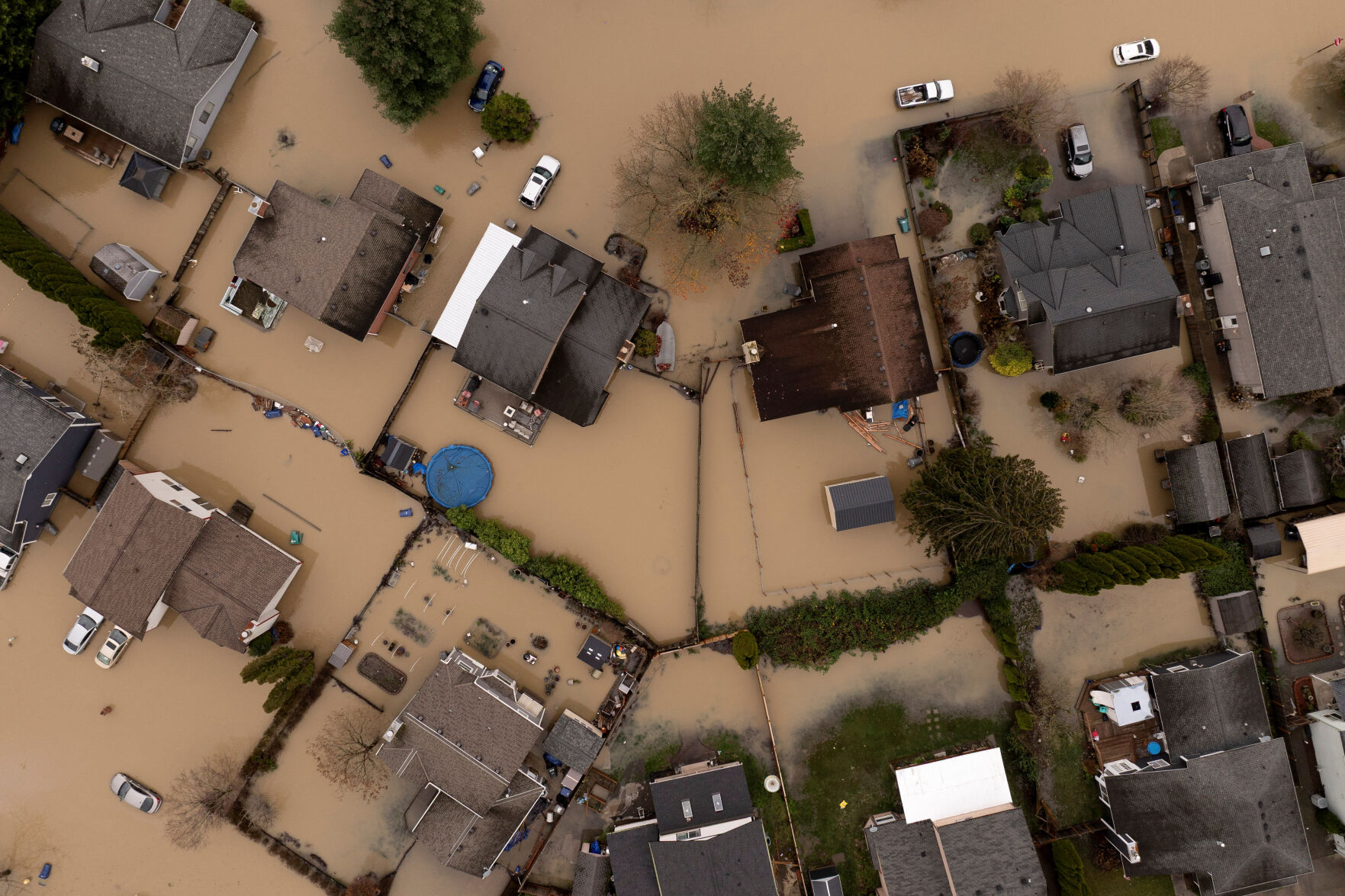
Atmospheric rivers are long and relatively narrow bands of water vapor that form over an ocean and flow through the sky. They carry moisture from the tropics to northern and southern latitudes, and can dump heavy rains or snow over land. According to the National Oceanic and Atmospheric Administration, they occur globally but are especially significant on the West Coast of the United States, where they create 30% to 50% of annual precipitation and are vital to water supplies but also can cause storms that produce flooding and mudslides.
Top weather agencies warn that the world should get ready for several years of even more record-breaking heat that pushes the globe to more deadly, fiery and uncomfortable extremes. Wednesday's five-year forecast from the World Meteorological Organization and the U.K. Meteorological Office says there's an 80% chance the world will break another annual temperature record in the next five years and it's even more probable that the world will again exceed the international temperature threshold set 10 years ago. Scientists say that means more heat deaths, wildfires, nastier hurricanes, downpours and droughts.
NOAA's Climate Prediction Center reports there is a 60% chance that a weak La Nina will develop this autumn and could last until March. La Nina is part of a natural climate cycle that can cause extreme weather across the planet. Northern parts of South America could see more rain than usual. Southern regions of the U.S. and parts of Mexico could be drier than average. The northern tier of the U.S. and southern Canada could be wetter than average.