Jerome Powell plans to remain on the board of the Federal Reserve after his term as chair ends next month "for an undetermined period of time," saying the "unprecedented" legal attacks by the Trump administration have put the independence of the nation's central bank at risk. The Fed Wednesday left its benchmark interest rate unchanged for the third straight meeting but signaled it could still cut rates in the coming months, moves that attracted the most dissents since October 1992. The Senate Banking Committee earlier approved Powell's successor as chair, Trump appointee Kevin Warsh, on a party-line vote.
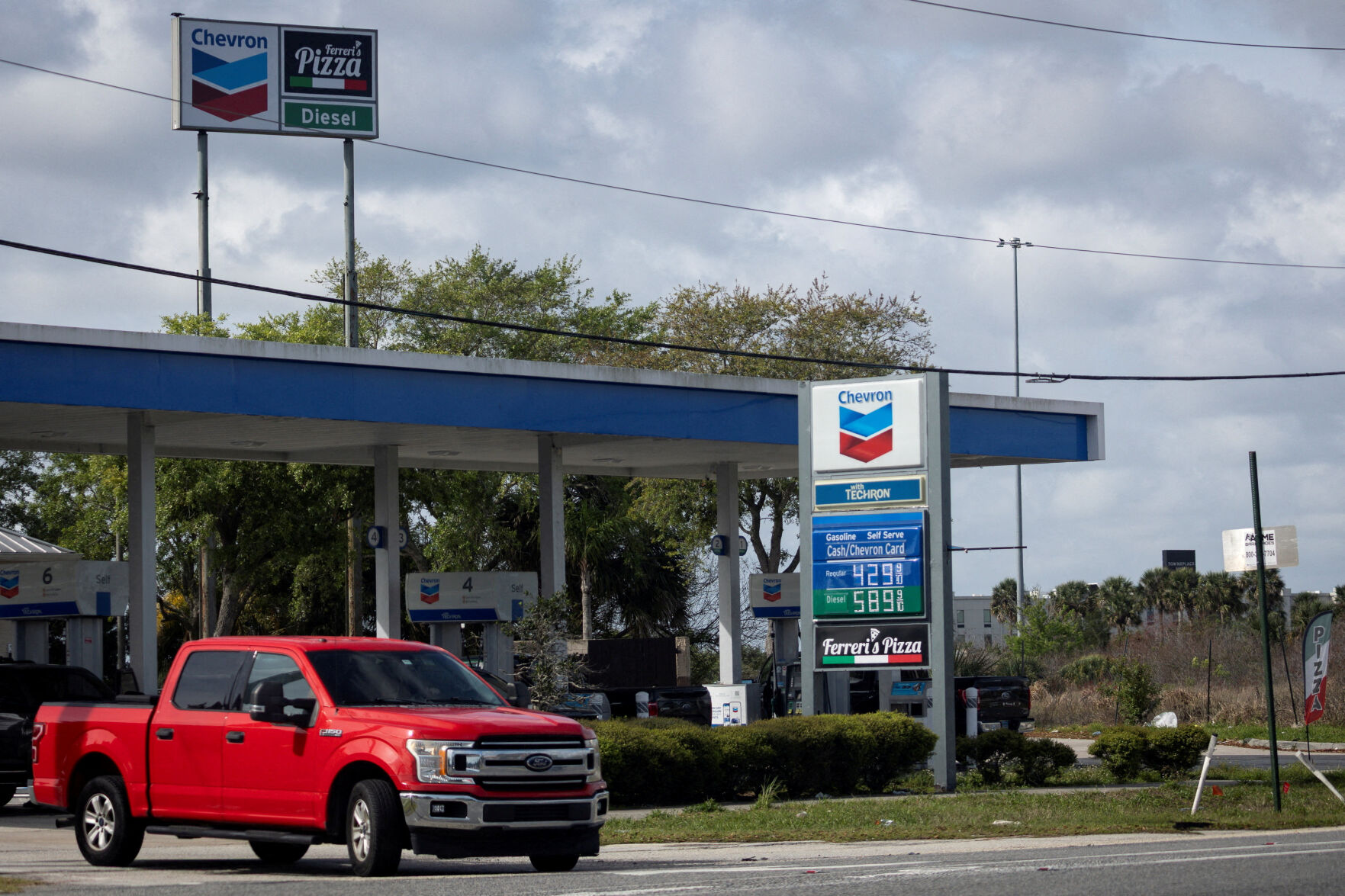
U.S. consumer confidence rose modestly in April despite growing anxiety over soaring energy prices brought on by the war in Iran. The Conference Board said Tuesday that its consumer confidence index inched up to 92.8 in April from 92.2 in March. Respondents' comments about prices, oil, gas and the war increased in April as the national average for a gallon of gas in the U.S. rose to $4.18 this week. The last time U.S. drivers were collectively paying this much at the pump was nearly four years ago, following Russia's invasion of Ukraine.
Shoppers accelerated their spending in March from February, but they spent a good chunk of their money at the gas pump. A spike in gas prices due to the Iran war, now in its eighth week, resulted in a hefty 1.7% gain in March after a revised 0.7% increase in February, according to the Commerce Department's report on Tuesday. The report marks the first read on spending to capture the effects of the Iran war. Excluding gas prices, the growth was a 0.6%, helped in part by government tax refunds and warm weather.
The Iran war has stalled the world's economic momentum this year, likely pushing growth lower compared to 2025, the International Monetary Fund warned Tuesday. The IMF downgraded its forecast for global growth to 3.1% in 2026 from the 3.3% it had forecast back in January. The expected growth would mark a deceleration from a 3.4% expansion in 2025. Citing higher energy prices caused by the war, the IMF marked up its expectation for global inflation this year to 4.4% from 4.1% in 2025 and from the 3.8% it had forecast for this year in January.
The largest monthly jump in gas prices in six decades caused a sharp spike in inflation in March, creating major challenges for the inflation-fighters at the Federal Reserve and heightening the political challenges of rising costs for the White House. The gas price shock stemming from the Iran war has shifted inflation's trajectory, from a slow, gradual decline to a sharp increase further away from the Fed's 2% target. As a result, the central bank will almost certainly postpone any cut in interest rates for months. Gas prices are also a highly visible cost that has outsize impacts on consumer confidence and political sentiment.
By PAUL WISEMAN and ANNE D'INNOCENZIO AP Business Writers
American employers added a surprisingly strong 178,000 new jobs last month, rebounding from a dismal February. And the unemployment rate dipped to 4.3%. The Labor Department reported Friday that hiring marked a rebound from the loss of 133,000 jobs in February. The job gains were about three times what economists had forecast. The unemployment rate was down from 4.4% in February. But uncertainty surrounding the war with Iran — and its impact on energy prices — is clouding the outlook for the labor market.
A new Gallup survey finds that Americans' outlook on the job market is increasingly pessimistic. The negative shift may seem incongruous with the low unemployment rate, but the findings likely reflect an ongoing hiring drought. Just 28% of workers in a quarterly Gallup survey conducted in the last part of 2025 said now is a "good time" to find a job, with 72% saying it is a bad time. Those figures are a sharp reversal from just a few years ago, in mid-2022, when 70% said it was a good time. Pessimism is especially pronounced among young people and college graduates.