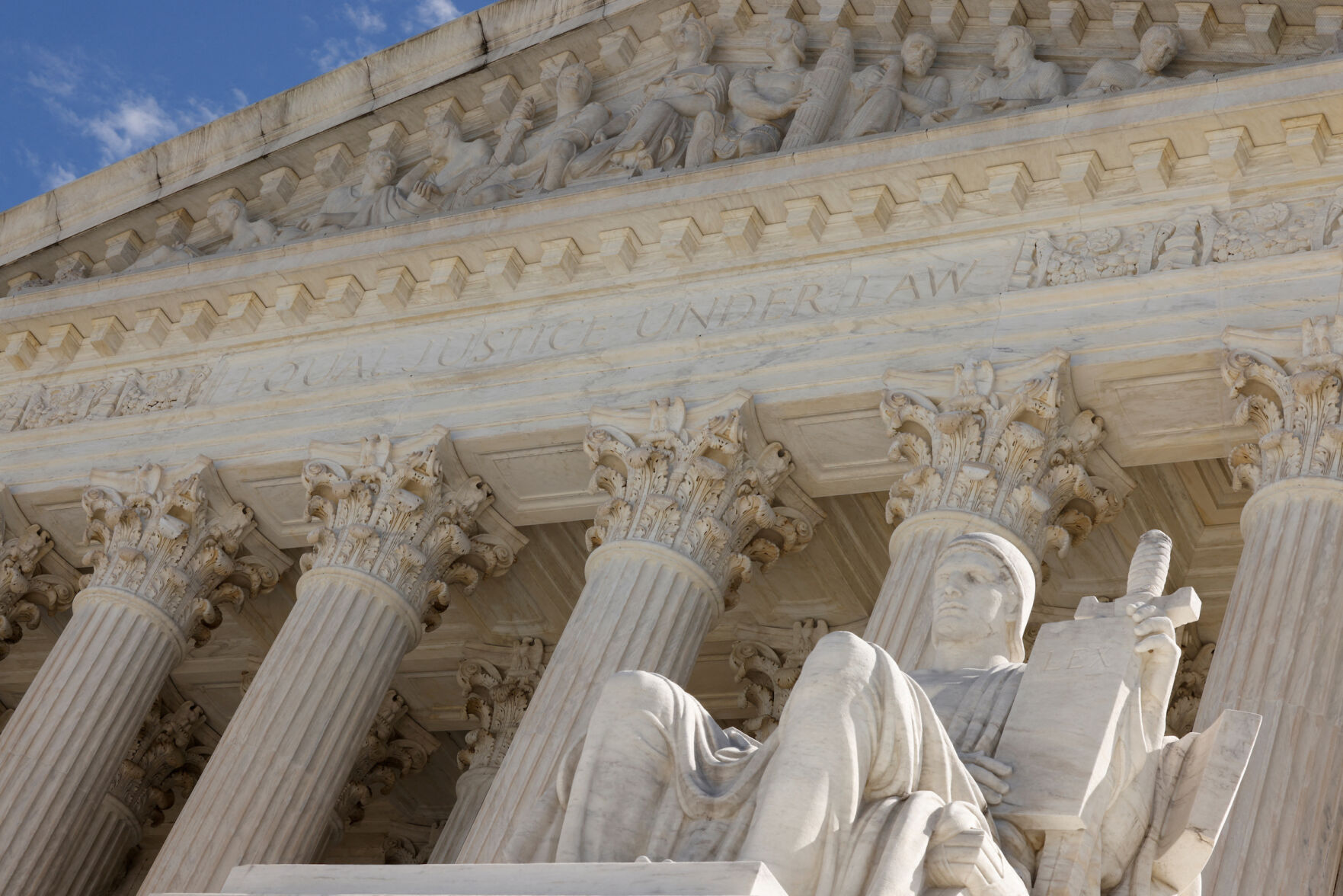
Supreme Court Justice Clarence Thomas is now the second longest-serving justice in history, overtaking someone who was nominated by President Abraham Lincoln. Thomas' tenure as of Thursday tops 34 years. The only justice with a longer tenure is William O. Douglas. Thomas will overtake Douglas in 2028 if he remains on the court — and there's no sign he plans to retire anytime soon. Thomas was confirmed in 1991 after contentious hearings that included sexual harassment allegations he denied. More recently, Thomas' acceptance of luxury trips has raised ethics questions. Thomas has nevertheless gone from near-silence at oral arguments to asking the first questions and penned a landmark ruling expanding Second Amendment rights.
By KIM CHANDLER, TRAVIS LOLLER and DAVID A. LIEB Associated Press
Lawmakers in several southern states will be meeting this week to consider redistricting plans in response to a U.S. Supreme Court ruling that weakened the Voting Rights Act. Republican Alabama Gov. Kay Ivey has called legislators into a special session starting Monday that could enable a new date for congressional primaries. Tennessee Republican Gov. Bill Lee has announced a special session starting Tuesday to redraw the state's U.S. House districts. And Louisiana lawmakers also are in session to consider how to redraw districts after the Supreme Court struck down a majority Black district in the state.
A Supreme Court decision striking down a majority Black congressional district in Louisiana has amplified an already intense national redistricting battle. The court's ruling Wednesday limits the use of race in drawing voting districts. In response, Louisiana Gov. Jeff Landry has suspended the state's May 16 congressional primary to allow time for state lawmakers to draw new House districts. Alabama Gov. Kay Ivey has called a special session to start Monday in case the Supreme Court allows the state to change its U.S. House districts. President Donald Trump also is urging Tennessee officials to redraw House districts to try to gain another seat for Republicans.
By MICHAEL KUNZELMAN and LINDSAY WHITEHURST Associated Press
A U.S. appeals court has blocked President Donald Trump's executive order suspending asylum access at the southern border. The court ruled Friday that immigration laws allow people to apply for asylum at the border, and the president cannot bypass this. The decision stems from Trump's action on Inauguration Day 2025, declaring the border situation an invasion and suspending asylum. The court found that the Immigration and Nationality Act doesn't give the president authority to override asylum procedures. The White House says the asylum ban was within Trump's powers, but the Department of Justice plans to seek further review.
President Donald Trump has railed against a federal judge's decision that continues to block above-ground construction of a $400 million White House ballroom. The decision on Thursday allows only below-ground work on a bunker and other "national security facilities" at the site. U.S. District Judge Richard Leon in Washington issued his latest ruling Thursday in a lawsuit over the ballroom project several days after an appeals court instructed him to reconsider the possible national security implications of stopping construction. Leon said he is ordering a stop only to the above-ground construction of the planned ballroom, apart from any work needed to cover or secure that part of the project.
The Education Department says it has terminated agreements that previous administrations reached with five school districts and a college aimed at upholding rights and protections for transgender students. The decision Monday means the department will no longer play a role in enforcing those agreements, which called for schools to take steps to comply with federal civil rights law. Under the Biden and Obama administrations, the department interpreted civil rights law to protect transgender students' rights to equal opportunity to an education. The Trump administration has penalized schools that have made efforts to accommodate students based on their gender identity.