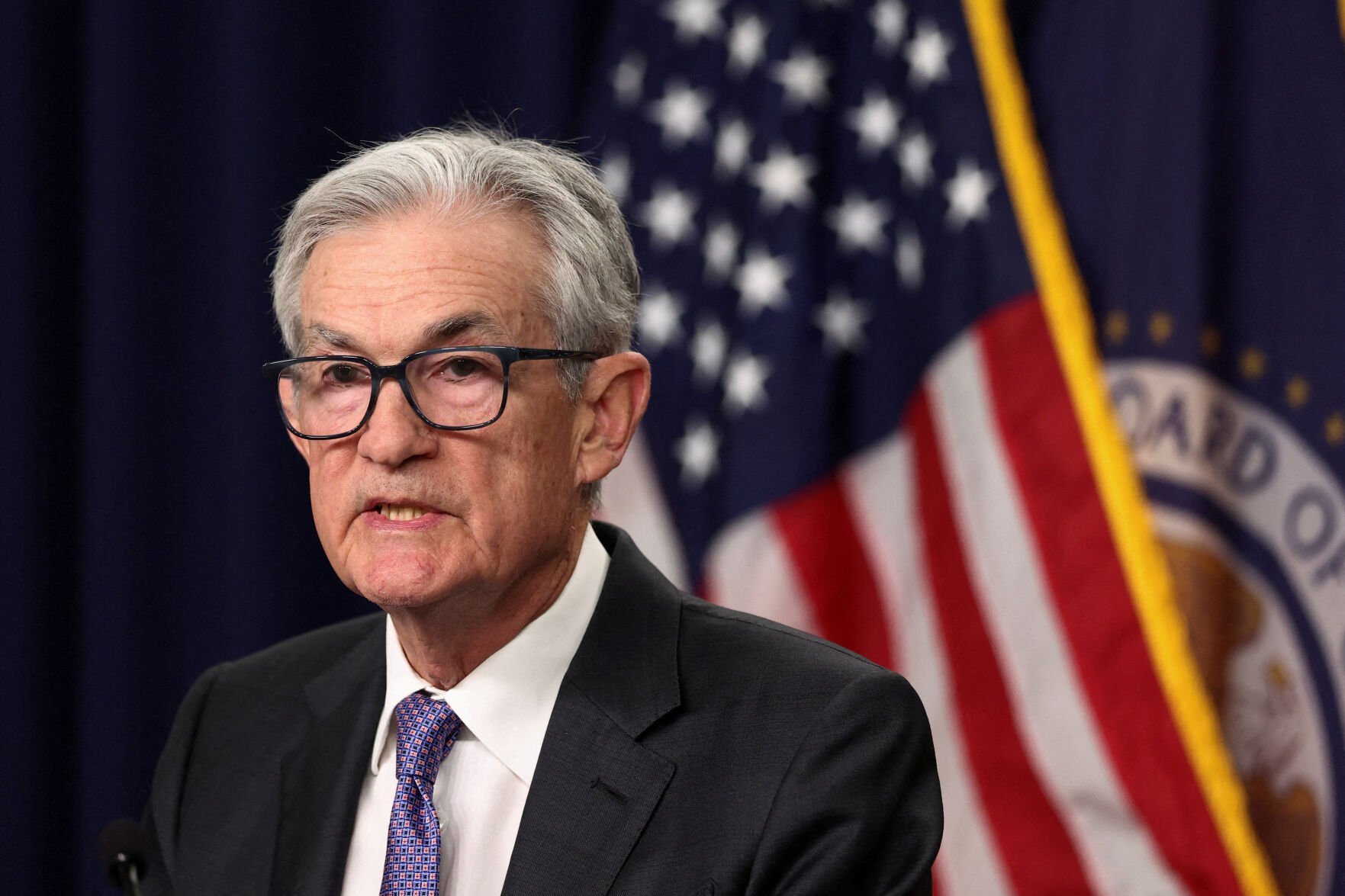
Jerome Powell isn't the first high-profile official to find himself targeted by the Justice Department since Donald Trump returned to the White House. The Republican president pledged in his inaugural address his government would apply the law fairly — unlike the way he said federal power had been turned against him. What's happened since is a string of indictments and inquiries and failed attempts at indictments against a long line of people who've crossed Trump. The list includes Federal Reserve governors who won't cut interest rates fast enough for Trump, former directors at the CIA and the FBI, and prosecutors who've investigated and even won cases against him.
Former Justice Department special counsel Jack Smith has told lawmakers in a closed-door interview his team "developed proof beyond a reasonable doubt" President Donald Trump criminally conspired to overturn his 2020 election loss. That's according to portions of Smith's opening statement obtained by The Associated Press on Wednesday. Smith says investigators had "powerful evidence" Trump broke the law by hoarding classified documents at his Florida estate from his first term as president and by obstructing government efforts to recover the records. Smith says decisions in the investigations were made without regard to consideration of Trump's Republican candidacy in 2024. Trump has said he'd rather see Smith testify publicly.
By LISA MASCARO, MARY CLARE JALONICK, FARNOUSH AMIRI and MATT BROWN Associated Press
Updated
Congress has certified Donald Trump as the 2024 presidential election winner without challenge. It's in stark contrast to 2021 violence. Lawmakers convened under heavy security and a snowstorm to certify the vote Monday, with the reading of the electoral results from the states coming swiftly. The legacy of Jan. 6, 2021, hung over Monday's proceedings as the Republican who tried to overturn the previous election is legitimately returning to power. As lawmakers gathered, the tightest national security was in place. It's a reminder of what happened at the U.S. Capitol four years ago, when a defeated Trump sent rallygoers to "fight like hell." Vice President Kamala Harris, presiding over her own defeat, said, "America's democracy stood."
By MICHAEL R. SISAK and JENNIFER PELTZ Associated Press
In an extraordinary turn, a judge has set President-elect Donald Trump's sentencing in his hush money case for Jan. 10 — little over a week before he's due to return to the White House — but indicated he wouldn't be jailed. Judge Juan M. Merchan issued the ruling Friday. He signaled in a written decision that he'd sentence the former and future president to what's known as a conditional discharge, in which a case is closed without jail time, a fine or probation. The development nevertheless leaves Trump on course to be the first president to take office convicted of felony crimes.
The judge overseeing Donald Trump's 2020 election interference case has canceled any remaining court deadlines after prosecutors said they need time to assess "the appropriate course going forward" after the Republican's presidential victory this week. Smith's team has been evaluating how to wind down the two federal cases before the president-elect takes office in light of longstanding Justice Department policy that says sitting presidents cannot be prosecuted, a person familiar with the matter told The Associated Press on Wednesday. In a court filing Friday in Trump's election interference case, Smith's team said it needs "time to assess this unprecedented circumstance and determine the appropriate course going forward consistent with Department of Justice policy."
Donald Trump says that if wins the White House, he'll fire special counsel Jack Smith "within two seconds" of taking office. Smith has charged Trump over his efforts to overturn the 2020 election and his mishandling of classified documents. Trump told conservative radio host Hugh Hewitt on Thursday that the decision would be "so easy." Trump, if elected, could order the Justice Department to remove Smith, But Trump probably would not be able to do it on his own because Smith isn't a presidential appointee. When Trump, while president, was investigated by special counsel Robert Mueller, Trump urged his then-White House counsel, Don McGahn, to press the Justice Department to terminate Mueller. McGahn refused.
The U.S. Supreme Court justices have sent Donald Trump's immunity case back to a lower court in Washington, dimming the prospect of a preelection trial. In a historic ruling, the justices said for the first time Monday that former presidents can be shielded from prosecution for at least some of what they do in the Oval Office. But rather than do it themselves, the justices ordered lower courts to figure out precisely how to apply the decision to Trump's case. The court also decided to keep a hold on efforts in Texas and Florida to limit how social media platforms regulate content posted by their users, returning to cases to lower courts.