By TOQA EZZIDIN, MUNIR AHMED and COLLIN BINKLEY Associated Press
U.S. President Donald Trump says that he's "not satisfied" with Iran's latest proposal in negotiations to end war between the countries. Trump told reporters Friday at the White House that Iran wants to make a deal but he says they are asking for things he can't agree to. Trump did not elaborate on what he sees as the proposal's shortcomings. The president said negotiations have continued by phone after he called off his envoys' trip to Pakistan last week. He expressed frustration with Iran's leadership, describing it as fractured. The shaky three-week ceasefire between the U.S. and Iran appears to be still holding.
By BASSEM MROUE, JON GAMBRELL, MIKE CORDER and SAMY MAGDY Associated Press
U.S. President Donald Trump is threatening that a "whole civilization will die tonight" if Iran fails to meet his latest deadline to strike a deal that includes reopening the Strait of Hormuz. Trump's expansive threat did not seem to account for potential harm to civilians. It prompted Democrats in Congress, some United Nations officials and scholars in military law to say such strikes would violate international law. Meanwhile, the Islamic Republic urged young people to form human chains around power plants and other potential targets. The president insisted the deadline is final and will expire at 8 p.m. in Washington. Pakistan's prime minister urged Trump to extend his deadline for Iran by two weeks, to allow diplomacy to advance.
By JON GAMBRELL, SAMY MAGDY, BASSEM MROUE and WILL WEISSERT Associated Press
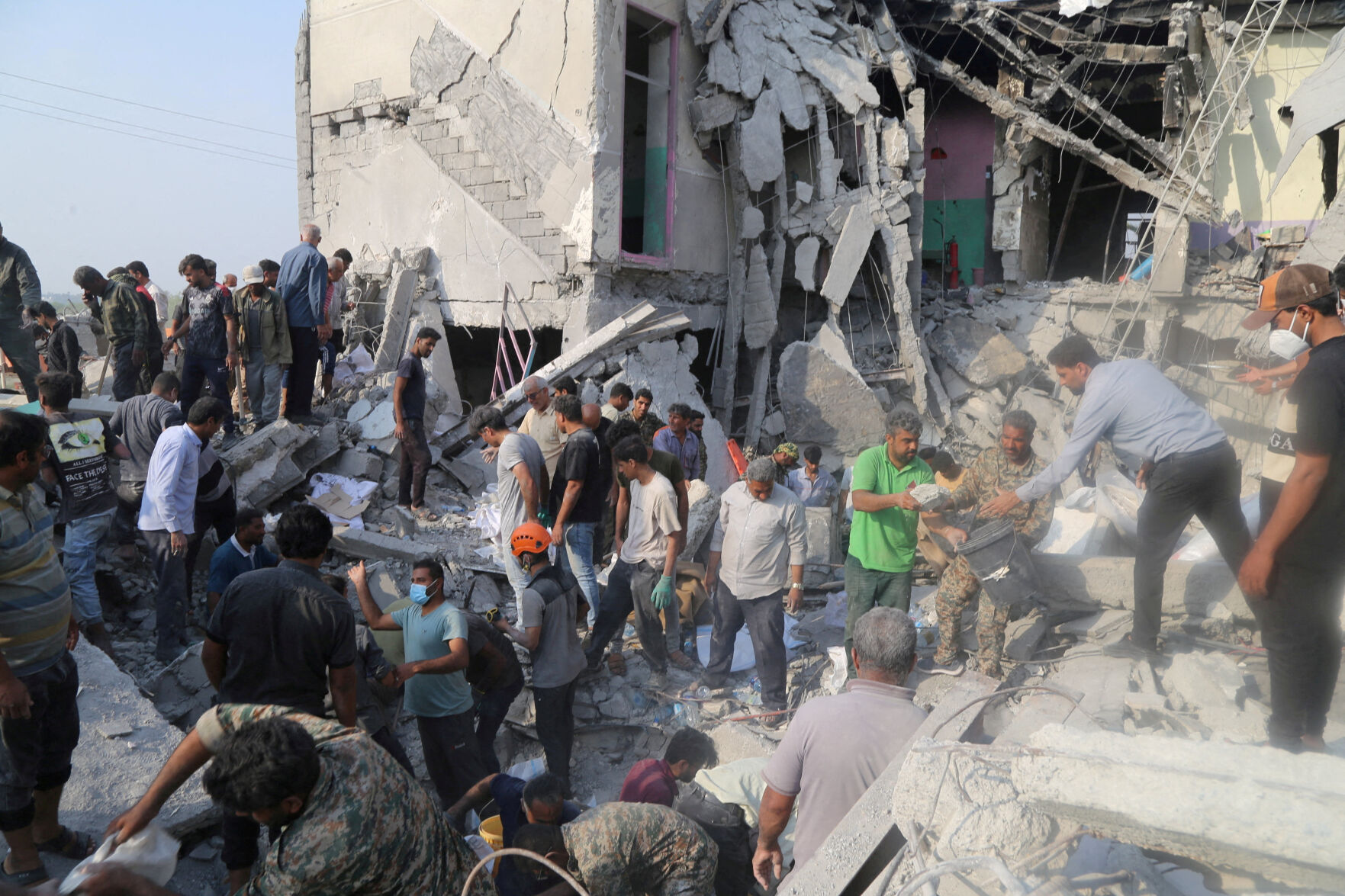
President Donald Trump has expanded his threat against Iran to include all power plants and bridges as his Tuesday ultimatum approaches. This comes after Tehran on Monday rejected a 45-day ceasefire proposal, demanding a permanent end to the war. Trump insists that Iran must open the Strait of Hormuz to all shipping traffic. Israel has increased pressure by attacking a major petrochemical plant and killing key Iranian commanders.Asked if he was concerned about accusations of war crimes, Trump responded, "No, not at all." Negotiations continue with mediators from Egypt, Pakistan, and Turkey attempting to broker a ceasefire.
By JON GAMBRELL, SAM MEDNICK and JULIE WATSON Associated Press
Iran is threatening recreational and tourist sites worldwide and insisting it is still building missiles three weeks into an escalating war in the Middle East. The United States is deploying more warships and another 2,500 Marines to the region. As Israeli strikes landed in Tehran, Iran launched more attacks on Israel and energy sites in neighboring Gulf Arab states. With little information coming out of Iran, it was not clear how much damage its forces have suffered in the punishing U.S. and Israeli strikes that began Feb. 28 — or even who was truly in charge of the country. But Iran's attacks are still choking off oil supplies and denting the global economy.
By JON GAMBRELL, DAVID RISING, MIKE CORDER and NATALIE MELZER Associated Press
Iran has intensified its attacks on oil and gas facilities around the Gulf, dramatically raising the stakes in a war that is sending shock waves through the global economy. Thursday's strikes came in retaliation for an Israeli attack on a key Iranian natural gas field. They sent fuel prices soaring and risked drawing Iran's Arab neighbors directly into the conflict. Tehran targeted energy production, further stressing global supplies already under pressure because of Iran's stranglehold on the Strait of Hormuz. That's a strategic waterway through which a fifth of the world's oil is transported. Israeli Prime Minister Benjamin Netanyahu says Iran no longer can enrich uranium or make ballistic missiles.
By JON GAMBRELL, DAVID RISING, MIKE CORDER and SAMY MAGDY Associated Press
Updated
Israel says it has killed two senior Iranian security officials in a major blow to the country's leadership. Iran, which confirmed one killing, fired salvos of missiles and drones Tuesday at its Gulf Arab neighbors and Israel. Israeli Defense Minister Israel Katz announced the deaths of Ali Larijani, the secretary of Iran's Supreme National Security Council, and Gen. Gholam Reza Soleimani, the head of the Revolutionary Guard's all-volunteer Basij force. The Iranian judiciary's news agency, Mizan, confirmed the killing of Soleimani and did not confirm nor deny the death of Larijani. Larijani was considered one of the most powerful figures in the country since Supreme Leader Ayatollah Ali Khamenei was killed on the first day of the war.
By JON GAMBRELL, DAVID RISING, MIKE CORDER and NATALIE MELZER Associated Press
Iran's new supreme leader released his first statement since succeeding his late father. Ayatollah Mojtaba Khamenei said Thursday that Iran would keep up its attacks on its Gulf Arab neighbors and use the effective closure of the strategic Strait of Hormuz as leverage against the United States and Israel. Khamenei, 56, who Israel suspects was wounded in the opening salvo of the war, did not appear on camera, as his statement was read by a state TV news anchor. The statement included a vow to avenge those killed in the war, including in a strike on a school that killed over 165 people.
The investigative group Bellingcat says newly released video "appears to contradict" U.S. President Donald Trump's claim that Iran was responsible for an explosion at an Iranian school that killed over 165 people. The video shared by Bellingcat is a three-second clip of a video on the day the school was struck, circulated Sunday by Iran's semiofficial Mehr news agency. The video shows a munition falling on a building. A Bellingcat researcher identified the munition as a Tomahawk cruise missile — which only the U.S. is known to possess in this war.
By JON GAMBRELL, JAMEY KEATEN and SAMY MAGDY Associated Press
Oil prices surged and stock markets slid after hard-line Ayatollah Mojtaba Khamenei was chosen to succeed his late father as Iran's supreme leader. His appointment on Monday, and new strikes on regional oil infrastructure, signaled that Iran was digging in 10 days into the war launched by the United States and Israel. The war has choked off major supplies of oil and gas to world markets, led foreigners to flee from business hubs and prompted millions to seek shelter as bombs hit military bases, government buildings, oil and water installations, hotels and at least one school. Khamenei is a secretive 56-year-old cleric and only the third supreme leader in the history of the Islamic Republic.