By HYUNG-JIN KIM, KIM TONG-HYUNG and HUIZHONG WU Associated Press
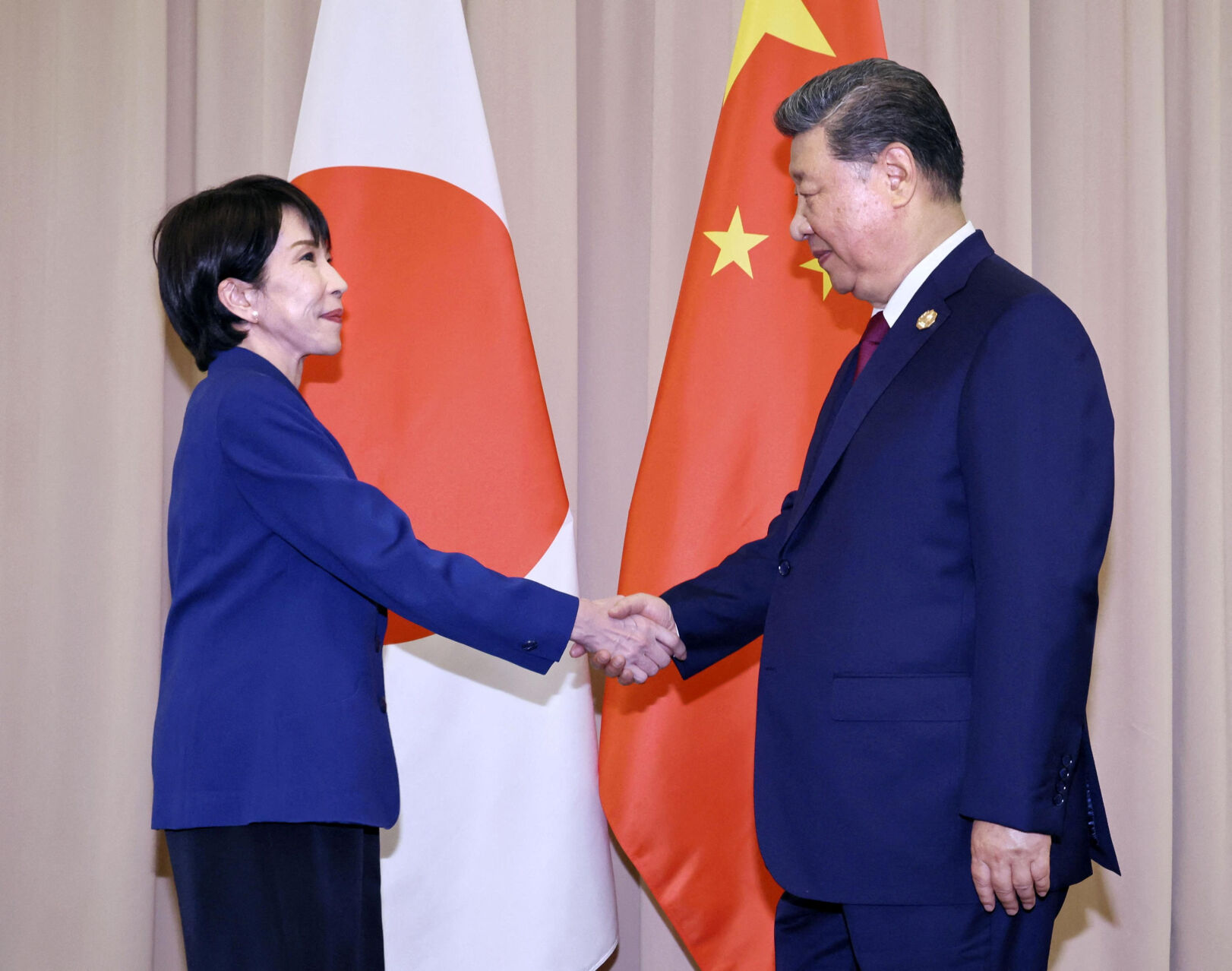
Chinese leader Xi Jinping told Asia-Pacific leaders his country would help to defend global free trade as U.S. President Donald Trump snubbed an annual economic regional forum. Xi took center stage at the Asia-Pacific Economic Cooperation summit that began Friday in the South Korean city of Gyeongju, as Trump left the country a day before the summit opened after reaching some deals with Xi meant to ease their escalating trade war. This year's two-day APEC summit has been heavily overshadowed by the Trump-Xi meeting that was arranged on the sidelines.
President Donald Trump says he is open to extending the free trade agreement with Mexico and Canada through a negotiation or seeking "different deals" as he met with Canadian Prime Minister Mark Carney at the White House. Carney made his second visit to the Oval Office ahead of next year's review of the United States-Mexico-Canada Agreement and as one of the world's most durable and amicable alliances has been fractured by Trump's trade war and annexation threats. Trump's tariffs and comments about annexation have strained relations with Canada. Carney hopes to address sector-specific tariffs, as more than three-quarters of Canada's exports go to the U.S.
Low-value imports are no longer eligible to enter the U.S. duty-free. An order signed by President Donald Trump eliminated a widely used customs exemption for international shipments worth $800 or less as of 12:01 a.m. Eastern time on Friday. The national postal services of more than 30 countries have temporarily suspended sending some or most U.S.-bound packages because of the change. They say they didn't have enough time or information to prepare for collecting the new import taxes on small parcels. Logistics experts say that in addition to bringing new costs for sellers and buyers, the end of the "de minimis" exception is likely to delay orders.
Canada is dropping retaliatory tariffs to match U.S. tariff exemptions for goods covered under the United States-Mexico-Canada trade pact. Prime Minister Mark Carney said Canada will include the carve-out that the U.S. has on Canadian goods under the 2020 free trade deal that shields the vast majority of goods from the punishing duties. The move is designed to reset trade talks between the two countries. The USMCA is up for review in 2026, and Carney called the trade pact a unique advantage for Canada at a time when it is clear that the U.S. is charging for access to its market.
China has been expanding use of digital currencies as it promotes wider use of its yuan, or renminbi, to reflect its status as the world's second-largest economy. It also wants to challenge the dominance of the U.S. dollar in international trade and finance. Restrictions on access to Chinese financial markets and limits on convertibility of the yuan, or "people's money," are big obstacles blocking its global use. Still, Hong Kong already has stablecoin regulations and some Chinese experts are pushing for regulations to prepare for a possible stablecoin pegged to the yuan. Such moves follow President Donald Trump's signing last month of a law regulating stablecoins.
Global financial markets are reacting to President Donald Trump's tariff adjustments. Markets rose across much of Europe and Asia, while stocks are slipping on Wall Street. Trump started imposing higher import taxes on goods from more than 60 countries, including the European Union, Japan and South Korea. The higher import taxes are part of his strategy to reduce the U.S. trade deficit and encourage foreign investment in America. But there are signs of stalled hiring, rising inflation and declining home values. Trump is optimistic about economic growth. But many experts warn of potential long-term damage.
\Top trade officials from China and the United States have launched a new round of talks aimed at easing tensions over tariffs. U.S. Treasury Secretary Scott Bessent and Chinese Vice Premier He Lifeng met in Sweden on Monday. Analysts say the two days of talks between the world's two biggest national economies could set the stage for a possible meeting between U.S. President Donald Trump and Chinese President Xi Jinping later this year. The Stockholm meeting is set to extend a 90-day pause on higher tariffs. The Trump administration also wants to reduce its nearly $300 billion trade deficit with China.
President Donald Trump on Monday set a 25% tax on goods imported from Japan and South Korea, as well as new tariff rates on a dozen other countries. Trump provided notice of the tariffs to begin on Aug. 1 by posting letters on Truth Social that were addressed to the leaders of the various countries. The letters warned them to not retaliate by increasing their own import taxes, or else the Trump administration would further increase import taxes. The higher tariffs could hinder economic growth, if not increase recession risks.
The U.S. economy shrank at a 0.5% annual pace from January through March as President Donald Trump's import taxes at least temporarily disrupted business, the Commerce Department reported Thursday in a a downgrade from its previous estimate. First-quarter growth sank under a surge of imports as companies in the United States rushed to bring in foreign goods before Trump could impose tariffs on them. The Commerce Department previously estimated that the economy fell 0.2% in the first quarter. The January-March drop in gross domestic product — the nation's output of goods and services — reversed a 2.4% increase in the last three months of 2024 and marked the first time in three years that the economy contracted.