

U.S. military contractors will need at least three years to replenish stockpiles of three key weapons systems used in the Iran war. That's according to the Center for Strategic and International Studies. The findings released Wednesday by the Washington think tank add to concerns American forces would have limited firepower in any future conflict with China. The weapons are Tomahawk cruise missiles and Patriot and THAAD interceptors that defend against incoming missiles and drones. President Donald Trump's Republican administration is ramping up defense spending and manufacturing. But it could still take years to rebuild inventories because contractors aren't used to producing the advanced weapons on such a large scale.
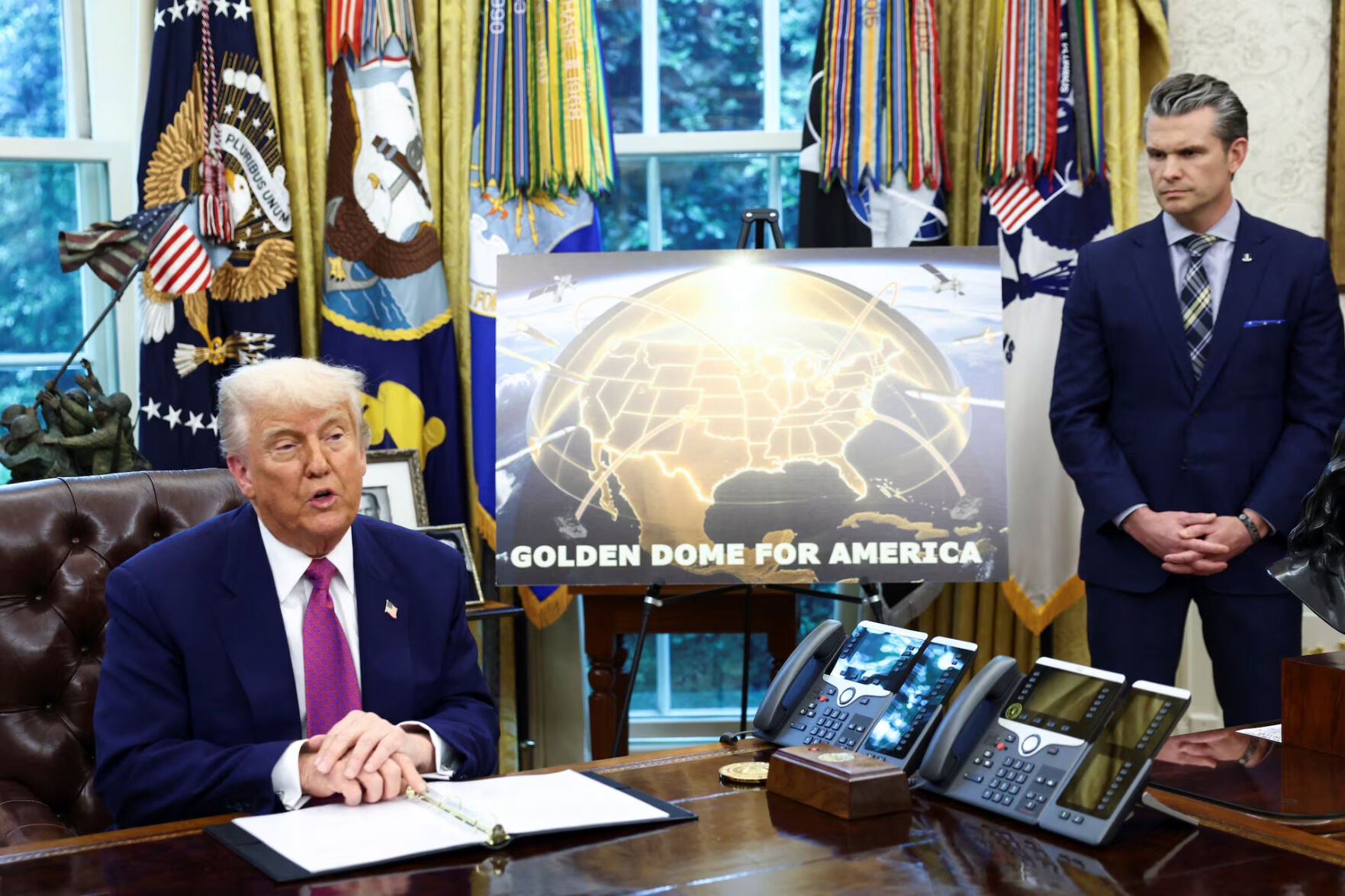
President Donald Trump's plan to put weapons in space, called the "Golden Dome for America" missile defense program, is estimated to cost much more than he originally said. A new Congressional Budget Office analysis, released Tuesday, suggests the cost could be $1.2 trillion over the next 20 years, significantly higher than the $175 billion Trump mentioned last year. The system, inspired by Israel's "Iron Dome," aims to detect and intercept missiles at all stages of an attack. Congress has already approved about $24 billion for the initiative. Trump ordered the system during his first week in office, expecting it to be operational before his term ends in January 2029.

European leaders say President Donald Trump's decision to withdraw U.S. troops from Germany is just the latest signal that Europe must take more responsibility for its security. The Pentagon announced last week that 5,000 troops would leave, but Trump said the number would be higher. The move surprised many, and comes amid tensions between Trump and German Chancellor Friedrich Merz over the Iran war. The leaders of Norway and Britain sought to downplay the impact of the troop reduction while acknowledging it provides a useful nudge for the continent to step up its role within NATO. European nations have increased defense spending over the past year in response to Trump's threats.

Defense Secretary Pete Hegseth clashed with Democratic lawmakers in Congress for a second day. At the start of a hearing Thursday in front of the Senate Armed Services Committee, Hegseth rejected senators' accusations that the Iran war was launched without evidence of an imminent threat and waged with no coherent strategy. He called Democratic lawmakers "reckless naysayers" and "defeatists from the cheap seats." He said they have failed to recognize the many successes of the military against the Islamic Republic over the last two months and in other operations since President Donald Trump returned to office.


