

In some of the most agriculturally rich regions in the U.S., researchers from San Diego State University are working to understand how climate change is impacting heat in rural areas and the farmworkers who toil in them. They're putting sensors on workers to measure their heart rates and core body temperatures while they work and evaluating environmental temperatures to assess occupational heat risk. Rising temperatures, decreased water supplies and shifting crop patterns are changing microclimates and increasing exposure to extreme heat for farmworkers, who are already among the most vulnerable to it. The project aims to map rural heat islands to better protect California farmworkers from scorching heat.
From
To
Featured
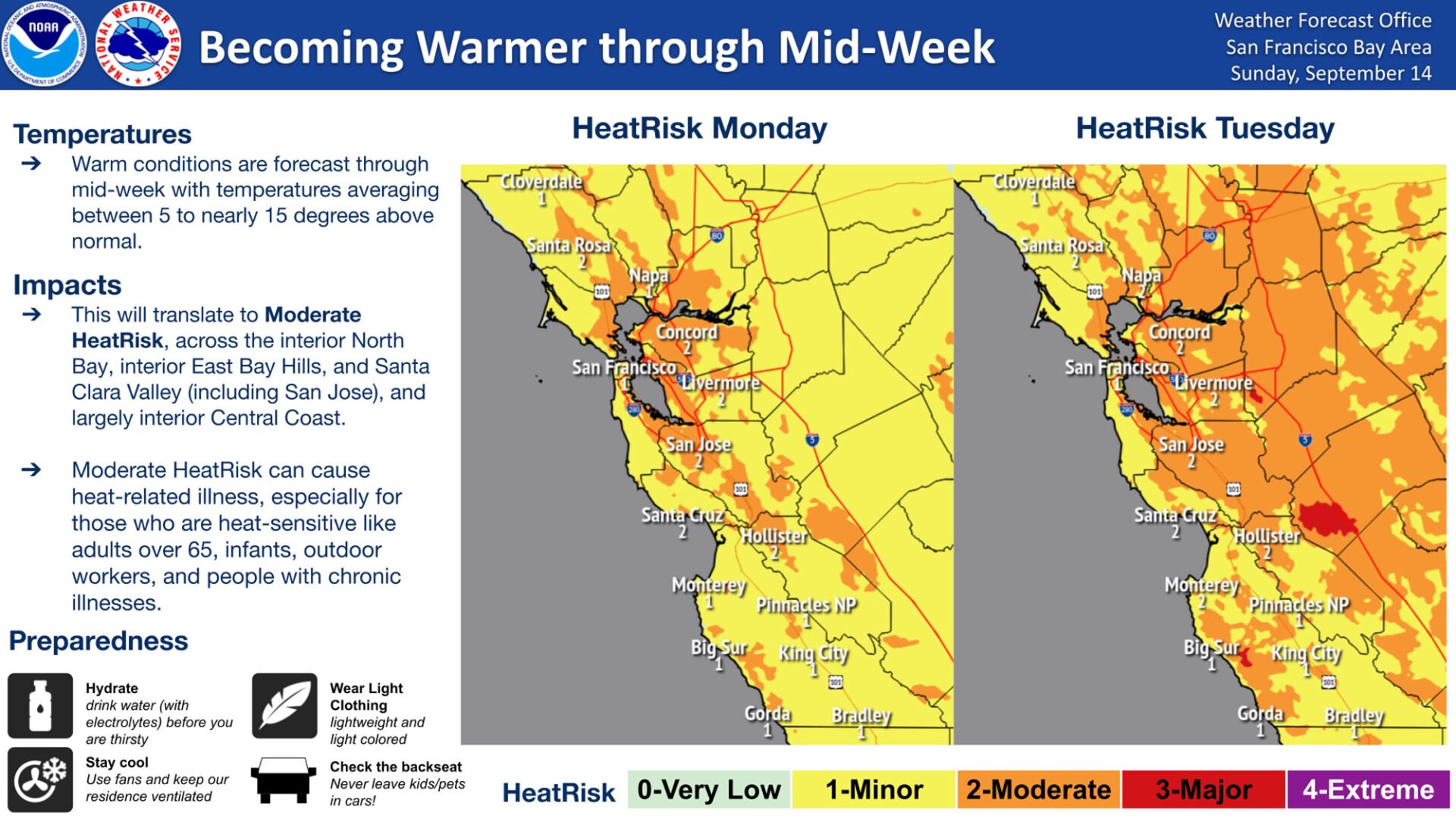
Warmer than normal temperatures are descending on the Bay Area early this week but will give way to the potential for monsoonal thunderstorms …

The temperature in New York City has reached 100 degrees as the eastern U.S. sweltered under an extreme heat wave. According to the National Weather Service, Kennedy International Airport recorded 100 degrees Fahrenheit at midday Tuesday. Large swaths of the country were broiling under a heat dome, worsened by a humid atmosphere that's circling the East. After nearly 40 US cities broke record high marks Monday, the weather service expected dozens of records Tuesday when the heat dome should hit its peak.

Summer will make a dramatic entrance in the U.S. this week with a heat dome that will bring stifling heat and uncomfortable humidity to millions. The heat will be particularly worrisome this weekend across wide stretches of Nebraska, Illinois, Wisconsin and Iowa, where forecasters are warning of extreme temperature impacts. This will be the first stretch of true summertime weather for many from Midwest to the East Coast, according to meteorologist Tom Kines of AccuWeather. The soupy conditions will stretch into next week and the humid conditions will make it feel extra toasty.

Featured
The Bay Area will endure the season's first miniheat wave at the end of this week, with temperatures topping 100 degrees in some inland areas,…

FORESTHILL, Calif. (AP) — Calmer weather in Northern California helped firefighters battle a smoky wildfire threatening thousands of mountain …

Featured
The National Weather Service is warning of an increased risk of wildfires in parts of the greater Bay Area and elsewhere in Northern Californi…

When it comes to measuring global warming, humidity, not just heat, matters in generating dangerous climate extremes, a new study finds.

BIG SUR, Calif. (AP) — Shifting winds and increased humidity have helped firefighters make progress against a blaze burning in rugged mountain…

SANTA BARBARA, Calif. (AP) — More than 1,300 firefighters helped by aircraft dumping water and fire retardant worked Thursday to box in a wild…


