By MARK SHERMAN, GEOFF MULVIHILL and MATTHEW PERRONE Associated Press
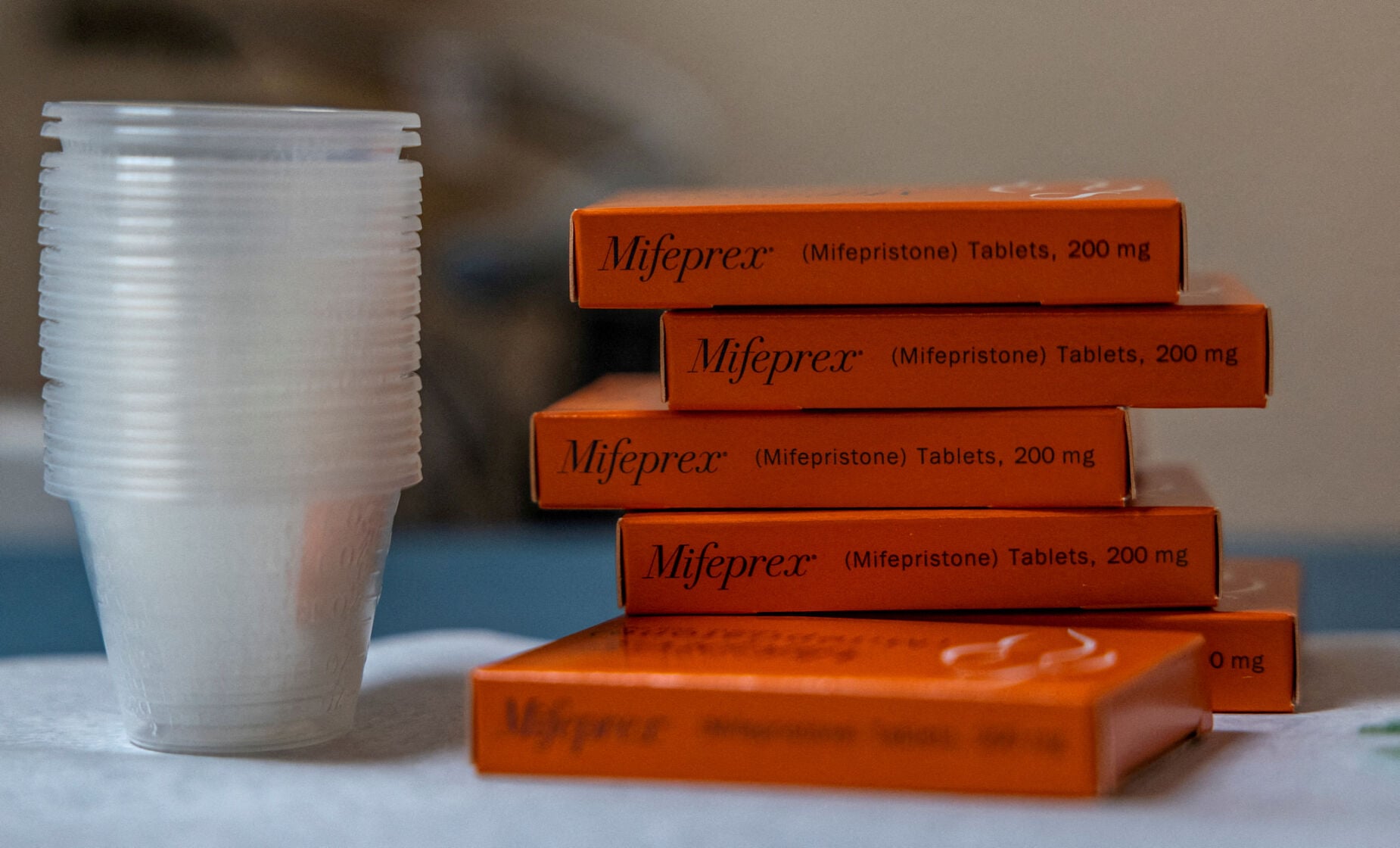
The Supreme Court is leaving women's access to a widely used abortion pill untouched until at least Thursday, while the justices consider whether to allow restrictions on the drug, mifepristone, to take effect. Justice Samuel Alito's order Monday allows women seeking abortions to continue obtaining the pill at pharmacies or through the mail, without an in-person visit to a doctor. It prevents restrictions on mifepristone imposed by a federal appeals court from taking effect for now. The court is dealing with its latest abortion controversy four years after its conservative majority overturned Roe v. Wade and allowed more than a dozen states to effectively ban abortion outright. Louisiana leads the current challenge.
By MARK SHERMAN and GEOFF MULVIHILL Associated Press
The Supreme Court has restored broad access to the abortion pill mifepristone, blocking a ruling that had threatened to upend one of the main ways abortion is provided across the nation. The order issued Monday allows women seeking abortions to obtain the pill at pharmacies or through the mail, without an in-person visit to a doctor. Those rules had been in effect for several years until a federal appeals court imposed new restrictions last week. Most abortions are obtained with medication, normally mifepristone and a second drug, misoprostol. The availability of those drugs has made abortion accessible to women in states with bans. Louisiana sued, saying mifepristone's availability undermined the ban there.
Women suffering through the hot flashes, night sweats, mood changes and sleep problems that can come with menopause — all while looking in the mirror and noticing signs of aging — are being bombarded with products. More open conversations about menopause and the period leading up to it — called perimenopause — are happening just as marketing has been supercharged by social media. Doctors say that before spending money on products that make big promises, it's important for women to talk to their doctors about what has actually been proven to help — and what could be harmful.
U.S. births slightly decreased in 2025. That's according to new provisional data from the Centers for Disease Control and Prevention. It reports just over 3.6 million births, about 24,000 fewer than in 2024. This decline aligns with expert predictions that the 2024 increase wouldn't start an upward trend. The CDC updated its data last week, covering nearly all of the babies born in 2025. Final numbers may add only a few thousand more. Despite efforts to encourage births, like expanding in vitro fertilization access, the fertility rate has been declining. Economic conditions and uncertainty continue to impact childbearing decisions.
California is giving Planned Parenthood $140 million to help keep 109 clinics open after Congress cut funding for the health system in July. Gov. Gavin Newsom said the move reflects the state's commitment to abortion and reproductive healthcare. Lawmakers will take up the issue of continued funding when the Legislature convents in January. Several clinics in California have closed or will stop offering primary care services. The nonprofit needs about $27 million a month to operate all of its local facilities. California is the fourth state — after Washington, Colorado and New Mexico — to pledge public funds to Planned Parenthood. Republicans have criticized Planned Parenthood for decades for offering contraceptive and abortion services.
Federal health officials have approved another generic version of the abortion pill, prompting outrage from abortion opponents. Anti-abortion groups quickly criticized the move on Thursday, calling it a "stain" on the Trump administration. The groups have been pushing for a safety review of mifepristone. The FDA first approved the drug as safe and effective in 2000. The new version of the pill is from drugmaker Evita Solutions. It's not the first generic version, which the FDA approved in 2019.