Defense lawyers in the Vatican's "trial of the century" have argued that Pope Francis violated the fundamental rights of their clients by issuing four secret decrees that gave prosecutors "surreal carte blanche" to investigate.The tone of argument in the frescoed Vatican tribunal was so charged Tuesday that at one point the tribunal president asked defense lawyers to refrain from citing Francis by name.The request by Archbishop Alejandro Arellano Cedillo underscored how Francis' problematic role in the financial trial poses something of an existential dilemma to the Holy See. On the one hand, popes can only be judged by God. On the other, Francis stands accused of violating the God-given rights of the defendants.
The Vatican is expected to soon announce that it will return a few dozen artifacts sought by Indigenous communities in Canada. It's part of its reckoning with the Catholic Church's troubled role in helping suppress Indigenous culture in the Americas. The items, including an Inuit kayak, are part of the Vatican Museum's ethnographic collection, known as the Anima Mundi museum. The collection has been a source of controversy for the Vatican amid the broader museum debate over the restitution of cultural artifacts taken from Indigenous peoples during colonial periods. Officials say negotiations are proceeding positively and that an announcement could come from the Vatican in a few weeks.
Pope Leo XIV has spoken publicly about his childhood in Chicago for the first time as pontiff. Leo recalled Thursday that from the age of six he used to get up early to serve as an altar boy at the 6:30 a.m. Mass before going to school. Leo shared the memories during an unscripted visit with the children of Vatican employees who are attending the Holy See's summer camp. The visit, which was not announced in advance, took place in the Vatican's main audience hall, which was decked out with huge inflatable bouncy castles.
Pope Leo XIV is warning that artificial intelligence could negatively impact the intellectual, neurological and spiritual development of young people. History's first American pope sent a message Friday to a conference of AI and ethics, part of which was taking place in the Vatican. In the message, Leo said any further development of AI must be evaluated according to the "superior ethical criterion" of the need to safeguard the dignity of each human being. Leo has identified AI as one of the most critical matters facing humanity, saying it poses challenges to defending human dignity, justice and labor.
Pope Leo XIV has affirmed core Catholic teaching on marriage and the unborn in his first meeting with the ambassadors accredited to the Holy See. He said Friday the family is founded on the "stable union between a man and a woman" and that the unborn and elderly enjoy dignity as God's creatures. Leo also called for reviving multilateral diplomacy and promoting dialogue between religions in the search for peace. The encounter with the Vatican diplomatic corps is one of the protocol requirements after a conclave, allowing a new pope to greet representatives of world governments ahead of his formal installation Mass this Sunday.
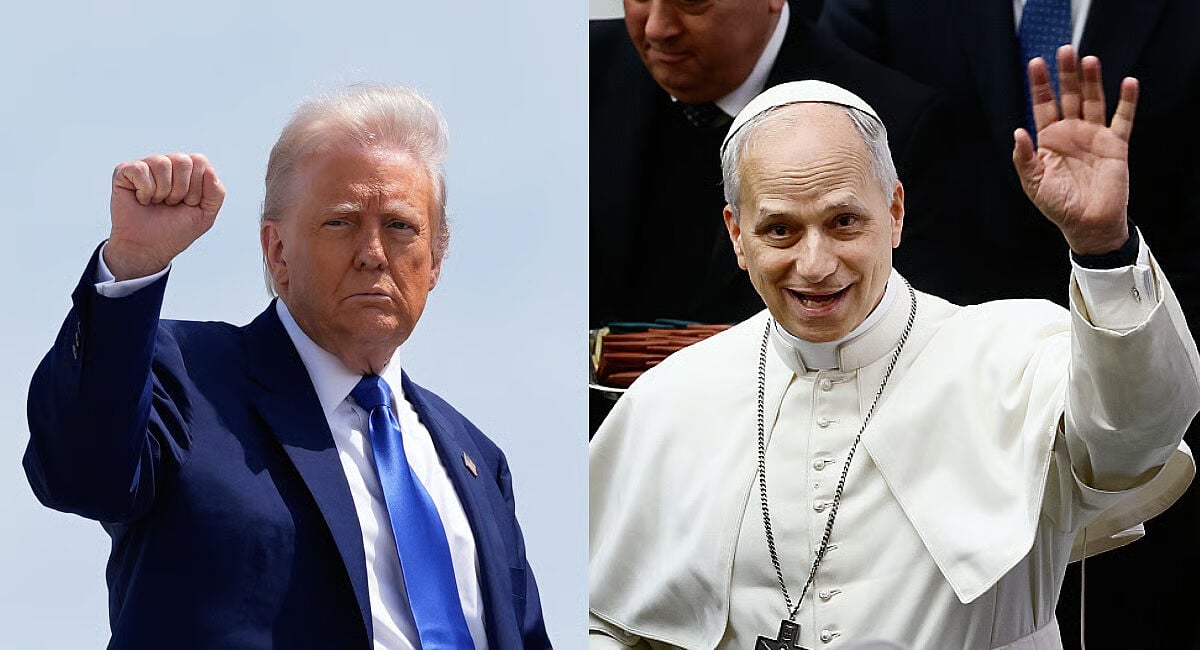
The contrast between President Donald Trump and Chicago-born Pope Leo XIV couldn't be more stark, politically, personally or in their world views. They lead in different roles and realms. But Leo's historic election last week to lead the world's 1.4 billion Catholics as the first U.S.-born pope means that the two most powerful people on the planet are Americans. That raises questions about American influence at a time when Trump's tariff wars and "one way or the other" threats have upended eight decades of global order and sparked distrust among allies toward the U.S. The prospect of too much American power in geopolitics is considered one reason that the Catholic Church had never elected an American to the papacy.
Pope Leo XIV has called for the release of imprisoned journalists and affirmed the "precious gift of free speech and the press." He spoke in an audience with some of the 6,000 journalists who descended on Rome to cover his election as the first American pontiff. Leo received a standing ovation as he entered the Vatican auditorium for his first meeting with representatives of the general public. The 69-year-old Augustinian missionary, elected in a 24-hour conclave last week, called for journalists to use words for peace, to reject war and to give voice to the voiceless.
Black smoke has poured out of the Sistine Chapel chimney, indicating no pope was elected on the first ballot of the conclave to choose a new leader of the Catholic Church. The smoke billowed out at 9 p.m. Wednesday, some four hours after 133 cardinals solemnly entered the Sistine Chapel, took their oaths of secrecy and formally opened the centuries-old ritual to elect a successor to Pope Francis to lead the 1.4 billion-member church. With no one securing the necessary two-thirds majority, or 89 votes, the cardinals will retire for the night to the Vatican residences where they are being sequestered. They return to the Sistine Chapel Thursday morning.
Cardinals have wrapped up their pre-conclave meetings before they enter the conclave to elect a new pope. They are trying to identify someone who could follow Pope Francis and make the 2,000-year-old Catholic Church credible and relevant today, especially to young people. The cardinals held their last day of pre-conclave meetings Tuesday morning during which Francis' fisherman's ring and his official seal were destroyed in one of the final formal rites of the transition of his pontificate to the next.
All Vatican personnel involved in supporting the upcoming papal conclave must take an oath of secrecy — under penalty of automatic excommunication. The ceremony on Monday, mandated by Vatican law and revised by Pope Benedict XVI, includes clerics and lay staff alike: cooks, cleaners, doctors, nurses and security officials. Nearly 135 cardinal electors will gather in the Sistine Chapel, beginning on Wednesday, to vote in secret for Pope Francis's successor. The oath, which explicitly forbids recording or disclosing anything from within the conclave, underscores the Church's insistence on confidentiality. Cardinals are bound by their own rules of secrecy. They will take their oaths on Wednesday.