By MICHELLE L. PRICE and WILL WEISSERT Associated Press
President Donald Trump is more overtly leaning into some of the spoils of his office in his second term, drawing comparisons to French Queen Marie Antoinette from political opponents. He has celebrated renderings of his $400 million White House ballroom even during the war in Iran and a partial government shutdown. His administration is pushing ahead with plans to build a 250-foot Triumphal Arch near the Lincoln Memorial. Democrats say Trump is more interested in the gilded trappings of the presidency than in everyday Americans' concerns about affordability. The White House says the projects "will benefit generations of future presidents and American visitors."
By LISA MASCARO and KEVIN FREKING Associated Press
The White House is releasing details of President Donald Trump's 2027 budget, including a $1.5 trillion defense spending request. That's the largest of its kind in decades. The Republican president had indicated even before the war against Iran that he wanted to increase defense spending to modernize the military. He's also calling for a 10% cut in non-defense discretionary spending. The president's annual budget does not carry the force of law. Instead, it reflects an administration's priorities and provides a road map to Congress, which handles spending issues. But Congress is free to reject it and often does.
By JOEY CAPPELLETTI and STEPHEN GROVES Associated Press
Updated
TMZ is turning its celebrity lens on Congress, tracking lawmakers on recess as a nearly six-week Department of Homeland Security shutdown drags on. Viral videos of senators in airports, Las Vegas and Disney World have fueled backlash and intensified pressure for lawmakers to return. That pressure now extends beyond social media, with unions and President Donald Trump all urging Congress back to Washington. But even if they return, there is no clear path to a deal. A bipartisan Senate agreement collapsed after House Republicans rejected it, leaving lawmakers at a deeper impasse and raising fresh questions about how — or whether — the standoff can end.
By KEVIN FREKING and STEPHEN GROVES Associated Press
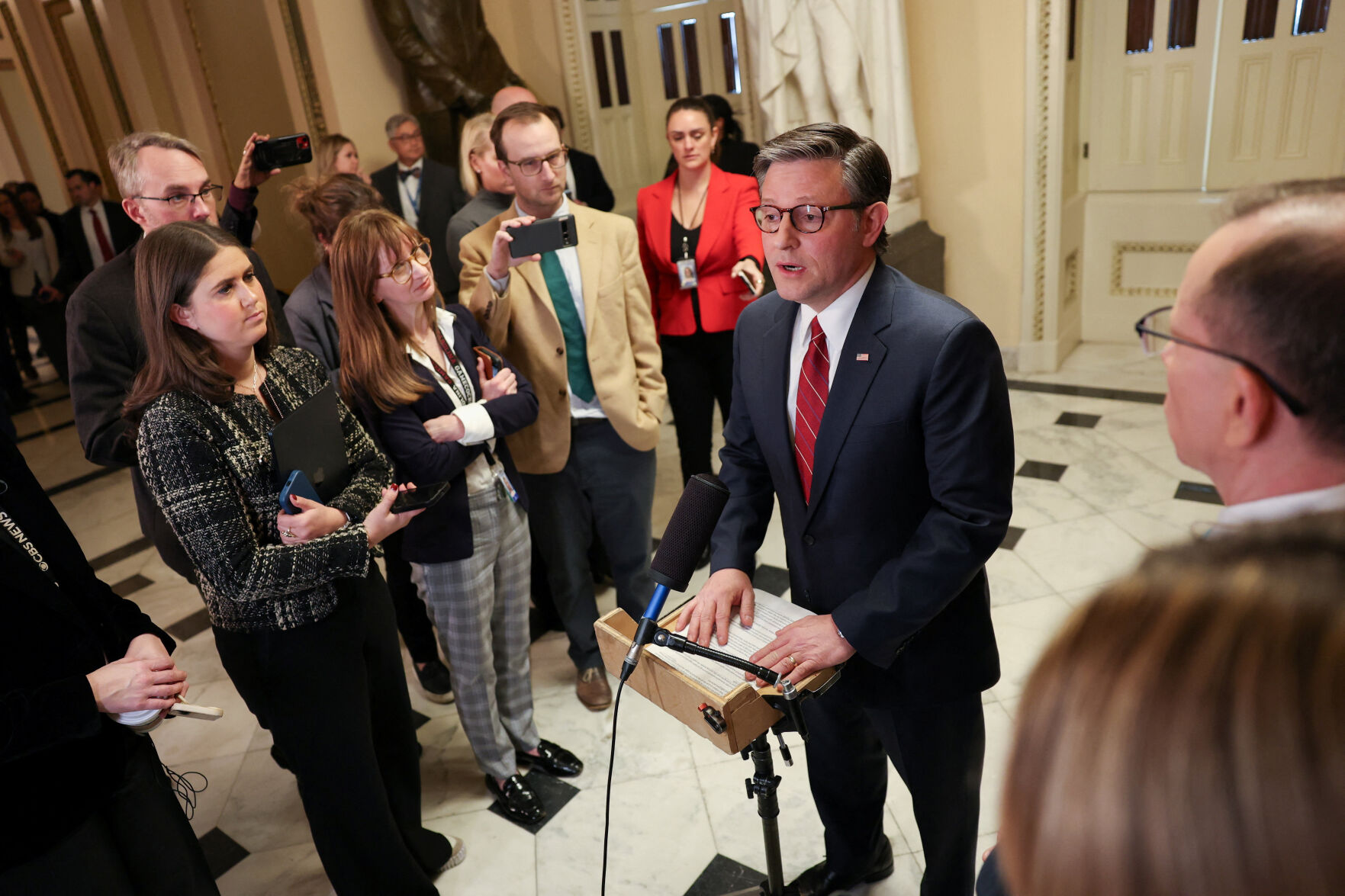
House Speaker Mike Johnson and Senate Majority Leader John Thune have announced what they're calling a path forward to fully funding the Department of Homeland Security and ending a record partial government shutdown. According to the plan, most of the department could be funded through an agreement with Democratic senators, with the exception of U.S. Immigration and Customs Enforcement and U.S. Border Patrol. Republicans would then later try to fund those agencies through party-line budgeting legislation. Neither outcome is guaranteed, and the strategy certain to face opposition from Democrats, if not the GOP's own ranks.
By LISA MASCARO and KEVIN FREKING Associated Press
The acting head of the Transportation Security Administration says it may have to shut down operations at some airports as travelers are experiencing record waiting times. In testimony Wednesday before a House committee, Ha Nguyen McNeill described the mounting hardships facing unpaid airport workers and warned of potential airport closures. Bills and eviction notices are piling up, and some workers are resorting to plasma donations to make ends meet. Her appearance on Capitol Hill comes as the latest offer to end a funding impasse and put restraints on President Donald Trump's mass deportation agenda is running into fierce resistance. But there appears to be no end in sight on the 40th day of the stalemate involving the Department of Homeland Security.
Storms sweeping across the eastern half of the country are disrupting air travel across the United States. FlightAware reported more than 3,500 flights canceled Monday and about 6,300 others delayed. The storms already dumped heavy snow across parts of the Midwest and were moving toward the East Coast with strong winds and the threat of tornadoes. The travel disruptions come during a busy period for airports, with spring break vacations and fans traveling for March Madness games. Meanwhile, a partial government shutdown affecting the Transportation Security Administration has stretched staffing at some airport security checkpoints, leading to longer lines in some places.
The House has passed a roughly $1.2 trillion spending package to end a partial government shutdown. The bill next goes to President Donald Trump for his signature. The vote wraps up congressional work on 11 of the 12 annual appropriations bills, funding the vast majority of the government until Sept. 30. But there's one more funding fight to come. The last bill still to be worked out covers the Department of Homeland Security, where Democrats are demanding more restrictions on enforcement operations. Speaker Mike Johnson says he expects the two sides will be able to reach an agreement on Homeland Security funding by the deadline.
House Speaker Mike Johnson faces tough days ahead trying to pass a federal funding package and prevent a prolonged partial government shutdown. Democrats are demanding changes to rein in the Trump administration's immigration enforcement operations after the deaths in Minneapolis. But Republicans are making their own demands in support of President Donald Trump's crackdown on illegal immigration. A partial shutdown started over the weekend when funding lapsed for several agencies. Trump struck a deal with senators, who approved new funding, but only temporarily for Homeland Security until Feb. 13. That would give Congress time to consider new restrictions on Immigration and Customs Enforcement. Johnson needs Trump to help push that deal through the House.
By MARY CLARE JALONICK and LISA MASCARO Associated Press
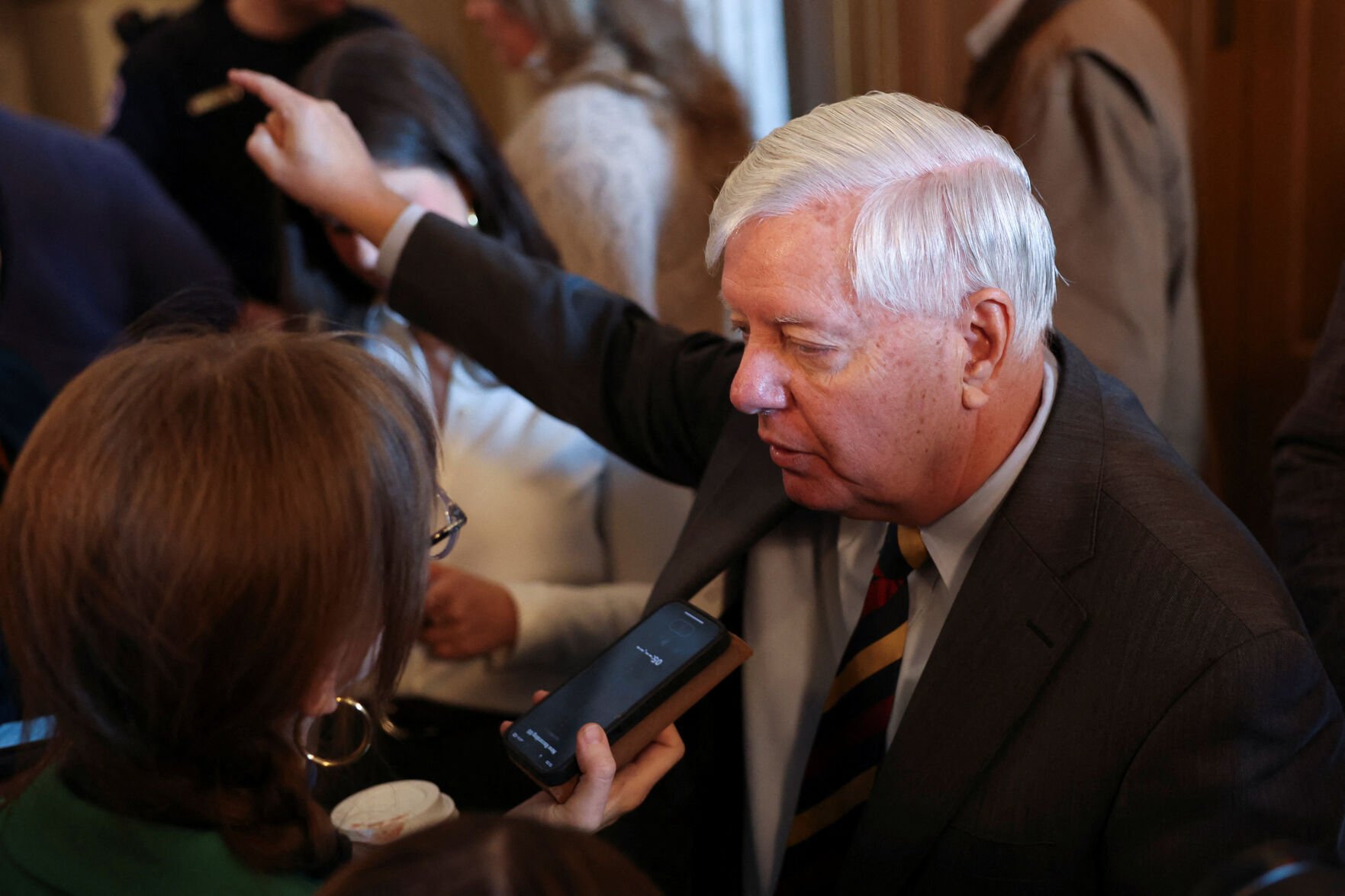
The bipartisan funding deal President Donald Trump struck with Democrats to prevent a partial government shutdown this weekend appears back on track. Key Republicans pushed back on the agreement Trump struck with Democrats who are demanding new restrictions on federal immigration raids across the country. Under the deal, funding for the Department of Homeland Security would be separated from a broad government spending bill and give Congress two weeks to debate the issue. But GOP Sen. Lindsey Graham and others warned that their party was yielding too much to Democrats. Even if the Senate wraps up its work Friday, the House is not due back until Monday, meaning there could be a temporary shutdown over the weekend.