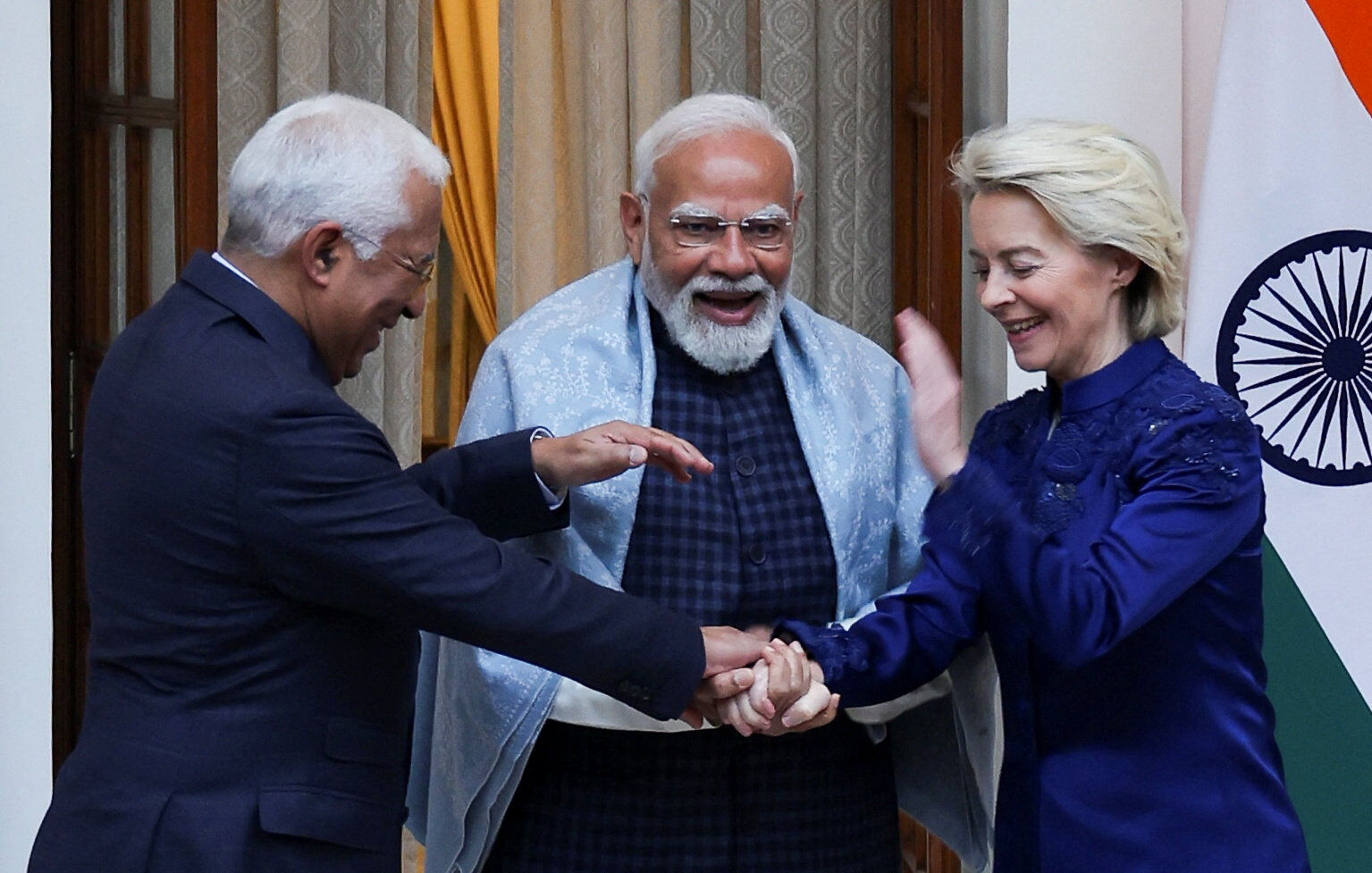
India and the European Union have reached a free trade agreement to deepen economic and strategic ties. The deal covers up to 2 billion people and was reached on Tuesday after nearly two decades of negotiations. It will likely take several months before the agreement takes effect. The deal represents 25% of global gross domestic product and a third of global trade. The agreement aims to lower tariffs, ease regulatory barriers and expand cooperation across goods and services. India will reduce tariffs on 96.6% of EU exports while the EU will reciprocate for nearly 99% of Indian shipments. The deal also includes a framework for deeper defense and security cooperation.
By DAVID McHUGH, LORNE COOK, AAMER MADHANI and DANICA KIRKA Associated Press
Updated
Whatever domestic economic gain comes from U.S. President Donald Trump's new 25% tax on imported cars — and experts are skeptical — automakers around the world are bracing for a lot of pain. In Japan, South Korea, Mexico, Canada and across Europe, the world's largest automakers employ millions of people whose livelihoods depend on U.S. car buyers, who currently spend more than $240 billion annually on imported cars and light trucks. The Trump tariffs — aimed at boosting U.S. jobs and tax revenues — will also affect imported auto parts, which were valued at $197 billion last year. The head of a European association for automakers says "the impact will be really huge and very disruptive" — and push average car prices higher.