By MARY CLARE JALONICK, KEVIN FREKING and JOEY CAPPELLETTI Associated Press
The Republican-led Senate is moving forward with legislation to fund immigration enforcement agencies after forcing the White House to drop its settlement fund for political allies and stripping a separate proposal for White House security from the bill. The Senate voted 53-46 on Wednesday to begin debate on the roughly $70 billion bill to fund U.S. Immigration and Customs Enforcement and the Border Patrol. The legislation was delayed for weeks as Republican senators navigated the various obstacles to passage created by President Donald Trump and the White House, but they are now moving quickly to pass it after paring it back to its original form.
By MARY CLARE JALONICK, KEVIN FREKING and SEUNG MIN KIM Associated Press
Senate Republicans say they are seeking reassurances from acting Attorney General Todd Blanche about the future of a new $1.776 billion settlement fund before they will move forward with legislation funding President Donald Trump's immigration enforcement agencies. Senate Majority Leader John Thune pointed to Blanche's expected testimony in a House committee Tuesday afternoon. He told reporters that Blanche "previewed what he was going to say" about the settlement, which is designed to compensate Trump's political allies and has met with strong pushback from Senate Republicans. Asked if it was his understanding that the settlement fund was off the table, Thune said "that is correct." Neither Blanche nor Trump have said anything publicly about the future of the fund.
By MARY CLARE JALONICK and KEVIN FREKING Associated Press
Republicans returning to Washington on Monday are facing questions about a $1 billion Senate security proposal that could help pay for President Donald Trump's ballroom. Democrats say they will try to defeat it. Senate Republicans added the money for White House security to a spending bill that would restore funding for immigration enforcement agencies that Democrats have blocked since February. The steep security proposal was put forward after a man was charged with trying to assassinate Trump at the White House Correspondents' Association dinner last month. Senate Democratic leader Chuck Schumer said Democrats will try to strip the security proposal from the bill.
Restless Democratic voters are rejecting their party's establishment. Six months before Election Day, Democratic voters are embracing change, taking a clear risk by picking less established and more polarizing candidates to represent them on the ballot this fall. In Maine, Gov. Janet Mills has been forced to formally abandon her U.S. Senate campaign, unable to generate sufficient fundraising or enthusiasm to compete in a primary against Graham Platner, an oyster farmer with no political experience. Mills' announcement Thursday marked a stinging defeat for Senate Democratic leader Chuck Schumer, who recruited her to lead the party's decades-long quest to defeat Republican Sen. Susan Collins.
By KEVIN FREKING, JOEY CAPPELLETTI and COLLIN BINKLEY Associated Press
President Donald Trump says he'll soon sign an order to pay all Department of Homeland Security employees who have gone without paychecks during the partial government shutdown that has reached 48 days. He announced the unilateral move in a social media post Thursday. He's blaming Democrats for the impasse while thanking Republican leaders for their work this week in trying to end the standoff. The Republican president used a similar maneuver to resume pay for the Transportation Security Administration. Trump's latest intervention is expected to apply to other non-law enforcement employees at the department, including the Federal Emergency Management Agency and the U.S. Coast Guard and support staff.
By KEVIN FREKING, LISA MASCARO and JOEY CAPPELLETTI Associated Press
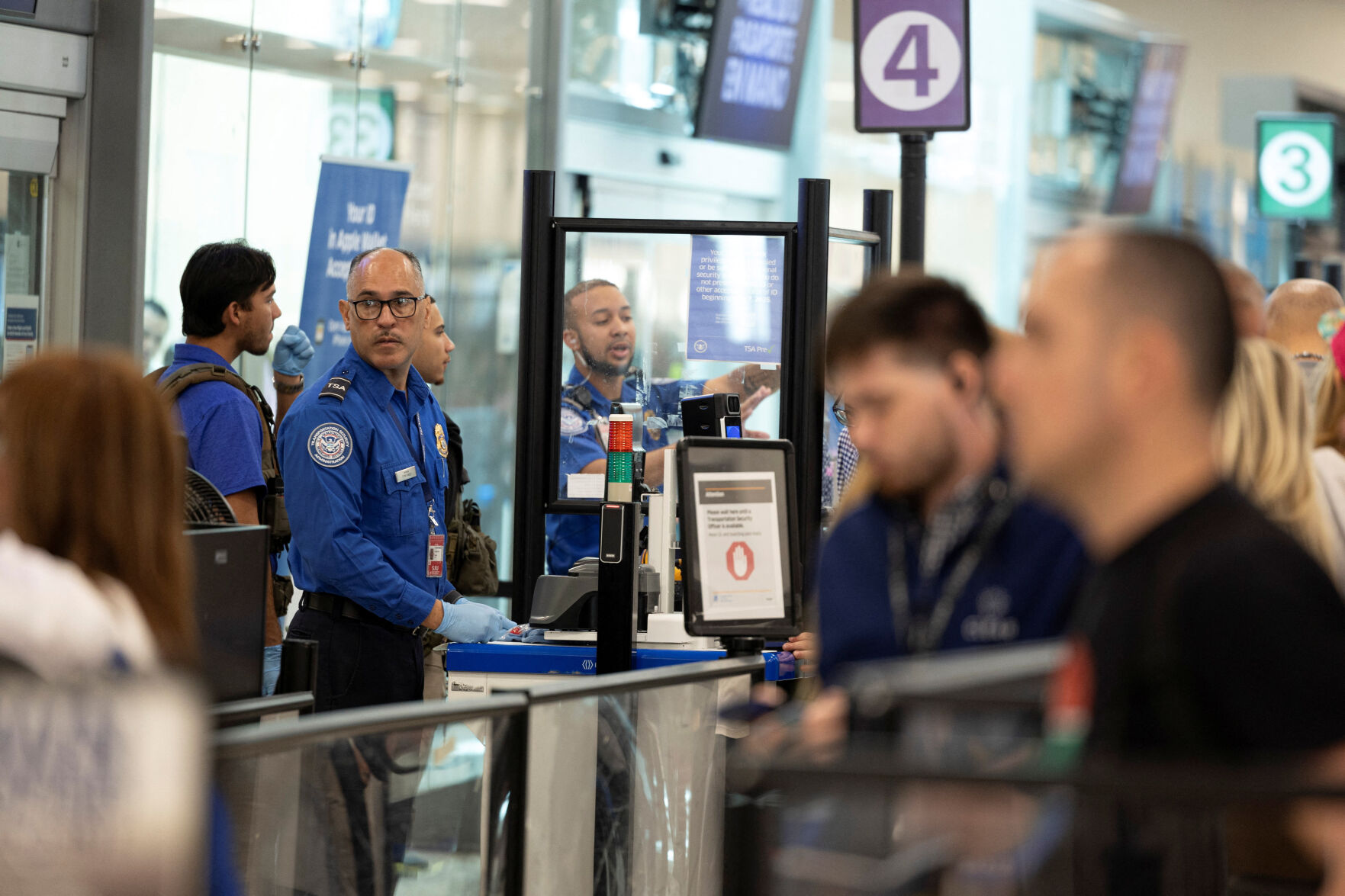
President Donald Trump has signed a promised executive action that will pay Transportation Security Administration employees, after a deal that sought to do the same stalled in Congress. Trump signed the action Friday with an eye toward easing long security lines at many of the nation's top airports. "America's air travel system has reached its breaking point," Trump said in the memo authorizing the payments. Homeland Security Secretary Markwayne Mullin says TSA workers "should begin seeing paychecks as early as Monday." Trump's action came after House Republicans rejected a Senate-passed bill to fund most of the Department of Homeland Security.
By LISA MASCARO and KEVIN FREKING Associated Press
Senators are trying to moved quickly to debate a "last and final" offer to end the funding impasse involving the Department of Homeland Security. The funding lapse that's led to a partial government shutdown now in its 41st day has jammed airport security lines and put the livelihoods of Transportation Security Administration workers in jeopardy. Republicans are trying to address Democratic demands for changes to President Donald Trump's immigration enforcement changes. A test vote was failing to advance an earlier proposal, but a new approach appears to be taking shape. Senate Majority Leader John Thune says he's given a the final offer to the Democrats.
By LISA MASCARO and KEVIN FREKING Associated Press
The acting head of the Transportation Security Administration says it may have to shut down operations at some airports as travelers are experiencing record waiting times. In testimony Wednesday before a House committee, Ha Nguyen McNeill described the mounting hardships facing unpaid airport workers and warned of potential airport closures. Bills and eviction notices are piling up, and some workers are resorting to plasma donations to make ends meet. Her appearance on Capitol Hill comes as the latest offer to end a funding impasse and put restraints on President Donald Trump's mass deportation agenda is running into fierce resistance. But there appears to be no end in sight on the 40th day of the stalemate involving the Department of Homeland Security.
A bill to fund the Department of Homeland Security is stalling out again in Congress. Republicans invoked the war in Iran and the prospect of retaliatory terrorist attacks as they tried Thursday to pass a bill funding the department. But Democrats blocked the legislation as they insist on changes to immigration enforcement operations. While the House will also take up the bill later Thursday, the vote will be more about putting lawmakers on the record again about where they stand. In the end, a bipartisan compromise will have to be reached to end a DHS shutdown that began Feb. 14.
By STEPHEN GROVES, LISA MASCARO and MARY CLARE JALONICK Associated Press
Updated
Senators are clashing over an Iran war resolution as Congress' first vote on the conflict draws near. In their debate Wednesday, Senate Democratic Leader Chuck Schumer implored fellow senators to ask themselves if they stand with Americans "exhausted with forever wars" or with a president and defense secretary set to "bumble us headfirst" into another one. Sen. John Barrasso is second in Senate Republican leadership and said Democrats would rather obstruct President Donald Trump than "obliterate Iran's national nuclear program." The vote is expected later Wednesday.