By SEUNG MIN KIM and DAVID KLEPPER Associated Press
President Donald Trump is pushing back against claims by the director of the National Counterterrorism Center about the motivations for the Iran war. In announcing his resignation Tuesday, Joe Kent claimed Iran "posed no imminent threat" to the United States. Trump says Iran is a "tremendous threat." Kent also says it's clear the U.S. started the war "due to pressure from Israel." The Republican president previously has denied Israel forced the U.S. to act. Kent is a former Washington state political candidate with connections to right-wing extremists. As head of the National Counterterrorism Center, Kent was in charge of an agency tasked with analyzing and detecting terrorist threats.
Many Iranians are worried as the United States assembles its greatest military firepower in decades in the Middle East and the next round of talks in Geneva get closer. There is a belief that the talks on Thursday may give their country's theocracy its last chance to strike a deal with President Donald Trump. There is also a feeling of hopelessness in a country battered by decades of sanctions, heightened by Trump's 2018 decision to withdraw from Tehran's nuclear deal with world powers. Iranians also last month suffered through the bloodiest crackdown on dissent in the country's modern history, with security forces killing thousands of people and detaining tens of thousands more.
By MICHELLE L. PRICE and WILL WEISSERT Associated Press
President Donald Trump has indicated that the U.S. has "hit" a dock facility along a shore as he wages a pressure campaign on Venezuela. But the U.S. offered few details. Trump initially seemed to confirm a strike in what appeared to be an impromptu radio interview Friday. When questioned Monday by reporters about "an explosion in Venezuela," the president said the U.S. struck a facility where boats accused of carrying drugs "load up." Trump declined to say if the military or CIA was involved or where it occurred. He didn't confirm it happened in Venezuela. The White House and Venezuela's government did not immediately respond to a request for more details or comment.
By JOSHUA GOODMAN, ERIC TUCKER and DAVID KLEPPER Associated Press
Legal experts say U.S. strikes against alleged members of Latin American drug cartels are pushing the bounds of international law. Under President Donald Trump, the U.S. military has struck several boats, killing 28 people, after authorities received information suggesting they were carrying drugs. Trump's administration is justifying this use of force by relying on a legal framework created after the Sept. 11, 2001, attacks. That framework allowed authorities to use lethal force against al-Qaida combatants responsible for the attacks on the U.S. The gangs now being targeted in Latin America, however, are a different foe, fueled not by anti-U.S. ideology but by the drug trade.
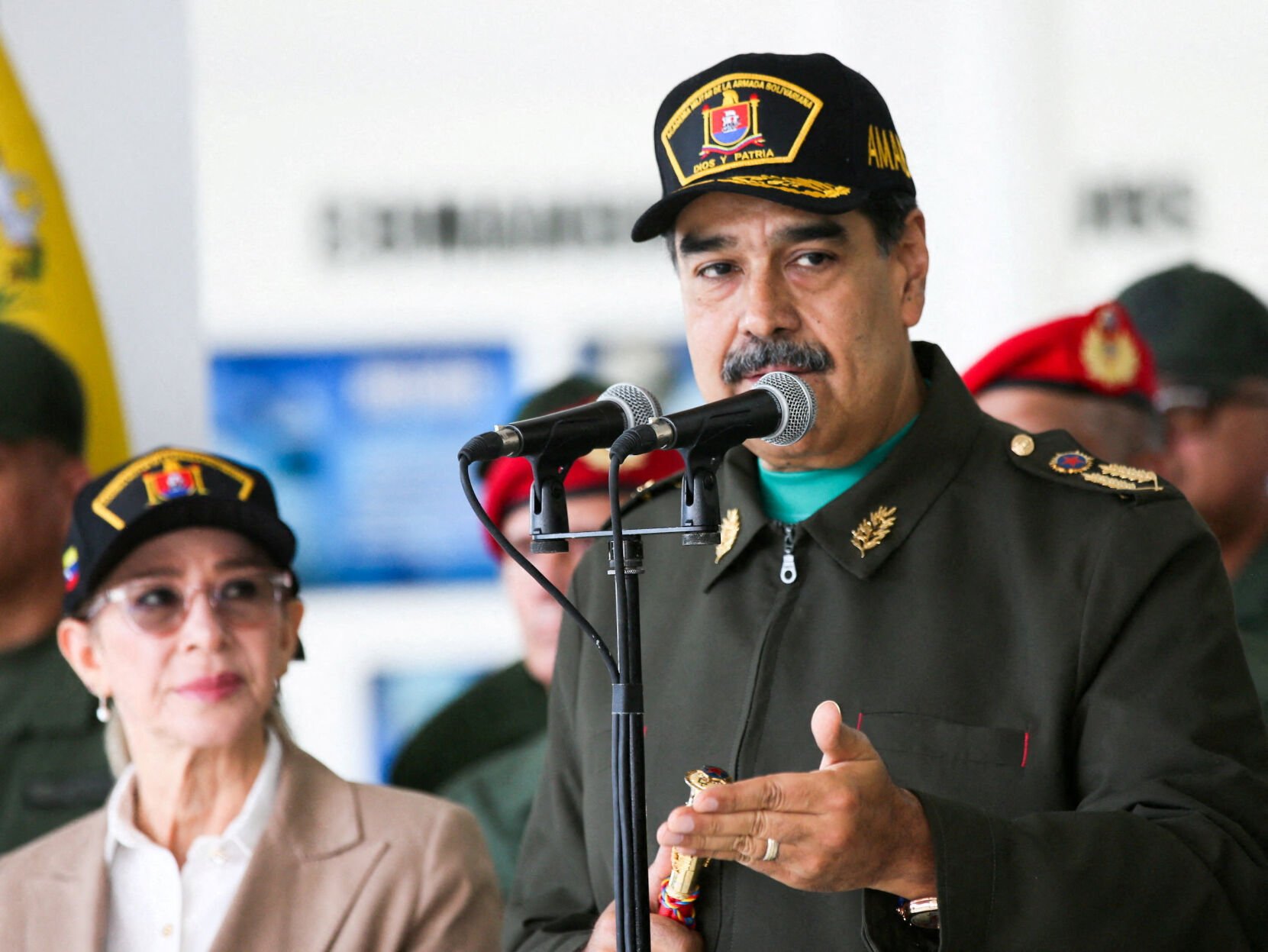
President Donald Trump has confirmed that he authorized the CIA to conduct covert operations inside Venezuela. The president on Wednesday also said he's considering land operations following recent U.S. military strikes on alleged drug-smuggling boats from Venezuela. Trump told reporters at an Oval Office event that he had authorized the move because Venezuela is allowing criminals and drugs to flow into the U.S. On Wednesday, Venezuelan President Nicolas Maduro lashed out at the record of the U.S. spy agency in various conflicts around the world without directly addressing Trump's comments about authorizing the CIA to carry out covert operations in Venezuela.
The CIA has released 1,500 pages of previously classified documents relating to the assassination of New York Sen. Robert F. Kennedy. The documents released Thursday reveal Kennedy met with the CIA to share his observations following a 1955 trip to the Soviet Union. The Democrat shared details of economic and political life in the USSR, information of high value to the agency during the Cold War. The material shows the CIA's efforts to investigate whether Kennedy's killer had ties to a foreign power and how his death was received overseas. Kennedy was shot June 5, 1968, at a Los Angeles hotel after a speech celebrating his victory in California's presidential primary.