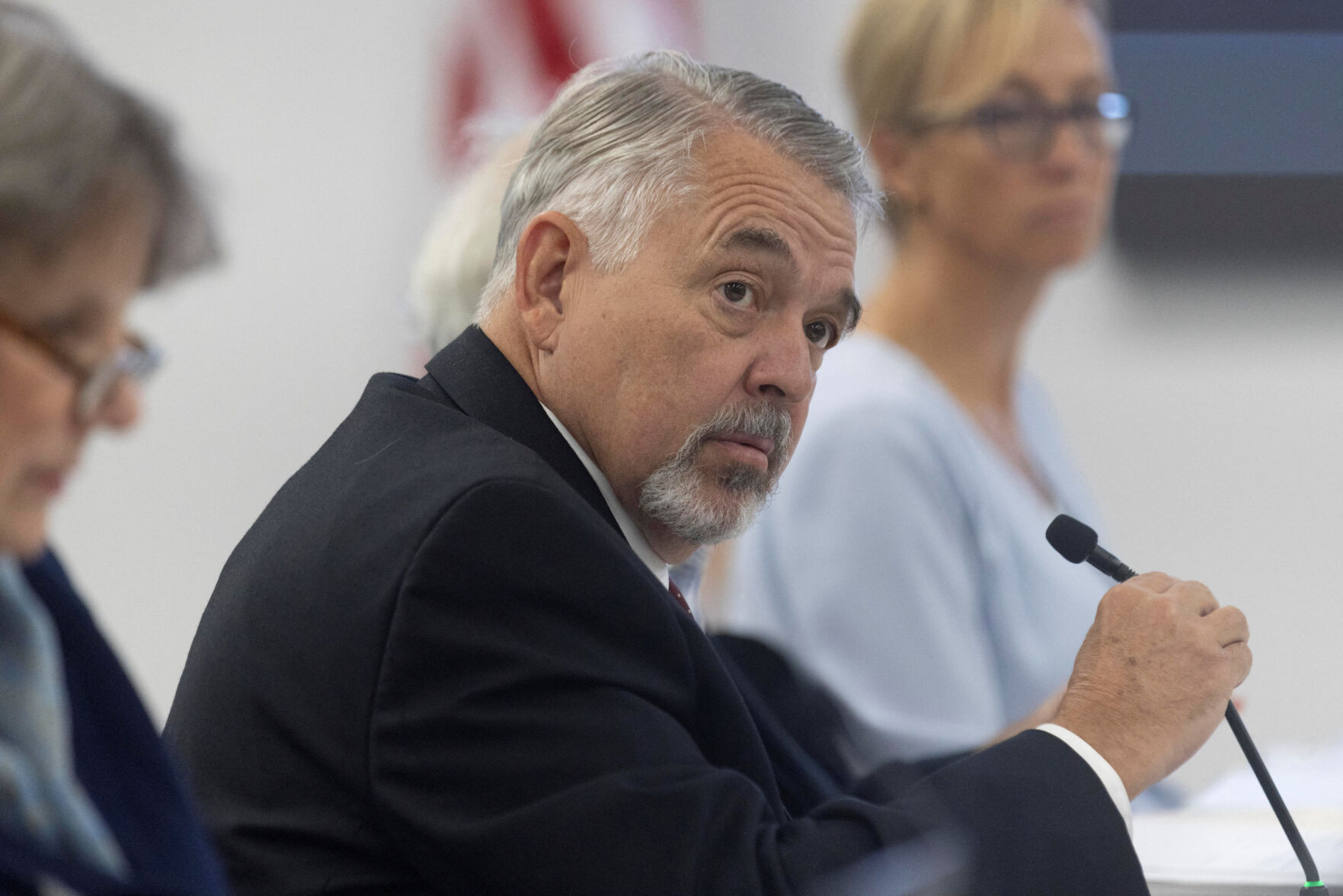
Wellness influencer and entrepreneur Dr. Casey Means shared a vision for addressing the root causes of chronic disease instead of what she calls "reactive sick care" during her confirmation hearing to become the next surgeon general. Wednesday's hearing in the Senate health committee was rescheduled from October, when Means went into labor the day she was set to appear. Means' message that dietary and lifestyle changes are needed to heal an ill and struggling nation aligns closely with that of her ally Health Secretary Robert F. Kennedy Jr. But she also faced tough questions about topics that have become divisive in recent years, such as vaccines and hormonal birth control, as well as about her qualifications for the job.
Robert F. Kennedy Jr. is reshaping U.S. health policy as HHS secretary, and doctors say his changes are eroding trust. Survey results show Americans' confidence keeps sliding, not rising. Kennedy has cut vaccine guidance, dismissed advisers and pushed claims medical groups call unverified. Doctors warn this confusion leads people to skip shots. They say that raises the risk of outbreaks. Polls from KFF and Gallup show trust in the CDC falling across groups. HHS says Kennedy is adding transparency and accountability. Critics say he is doing the opposite.
U.S. births slightly decreased in 2025. That's according to new provisional data from the Centers for Disease Control and Prevention. It reports just over 3.6 million births, about 24,000 fewer than in 2024. This decline aligns with expert predictions that the 2024 increase wouldn't start an upward trend. The CDC updated its data last week, covering nearly all of the babies born in 2025. Final numbers may add only a few thousand more. Despite efforts to encourage births, like expanding in vitro fertilization access, the fertility rate has been declining. Economic conditions and uncertainty continue to impact childbearing decisions.
By MIKE STOBBE and LAURAN NEERGAARD Associated Press
Health Secretary Robert F. Kennedy Jr.'s new vaccine advisers added confusion Friday to this fall's COVID-19 vaccinations. For the first time since the shots were developed, the group has declined to recommend their use — instead leaving the choice up to those who want them. The Food and Drug Administration recently put new restrictions on this year's shots from Pfizer, Moderna, and Novavax, reserving them for people over 65 or younger ones at higher risk. The Centers for Disease Control and Prevention advisers declined to recommend that those people seek a shot but narrowly avoided urging states to require a prescrption for those who want one.
The Trump administration is urging public health agencies to prioritize investigations of vaccine injuries, prescription drug use and autism's causes. The call is part of a new "Make America Healthy Again" report released Tuesday. Overseen by Health Secretary Robert F. Kennedy Jr., the report aims to end childhood diseases in the U.S. by refocusing public health on his so-called "MAHA" movement's priorities. The report suggests using personal medical records and health insurance data to investigate diseases and disorders, including autism. It also addresses issues like ultraprocessed food consumption and water quality. And it calls for increased oversight of prescription drug ads, especially those by social media influencers.
U.S. Health Secretary Robert F. Kennedy Jr. faced tough bipartisan questioning about his COVID-19 policies in a Senate committee hearing. On Thursday, Democratic senators clashed with Kennedy over his changes to vaccine recommendations, while some Republican senators also expressed concerns. Kennedy praised President Donald Trump for the Operation Warp Speed initiative but criticized the safety of mRNA vaccines. He defended the firing of the CDC director, claiming she was dishonest. Kennedy's actions, including replacing a vaccine advisory panel with skeptics, have drawn criticism from medical groups. They warn his policies could increase vaccine-preventable diseases and have called for his resignation.
By MIKE STOBBE, AMANDA SEITZ and CHRIS MEGERIAN Associated Press
Three top officials at the Centers for Disease Control and Prevention have been escorted off the public health agency's Atlanta campus as the White House tries to remove its leader. This turmoil is part of Health Secretary Robert F. Kennedy Jr.'s push for anti-vaccine policies. The officials resigned after the White House announced plans to oust Susan Monarez as director. Monarez's lawyers say she refused to support unscientific directives. Kennedy has warned of more firings. The situation has raised concerns about the CDC's leadership and the legitimacy of upcoming vaccine advisory meetings. Kennedy is scheduled to testify on Capitol Hill on Sept. 4.
Measles cases in the U.S. are at their highest in more than three decades. The U.S. Centers for Disease Control and Prevention says the U.S. has 1,288 cases since the beginning of the year. That's higher than 2019, when there 1,274 cases driven by 22 outbreaks over 12 months. Eighteen states have seen outbreaks this year. Experts fear the U.S. may lose its status as having eliminated measles. There are also large outbreaks of the vaccine-preventable disease in Mexico and Canada.
By LAURAN NEERGAARD and TOM MURPHY Associated Press
For many Americans, it's not clear how easy getting a COVID-19 vaccination will be. Health Secretary Robert F. Kennedy Jr. recently said the shots are no longer recommended for healthy children and pregnant women, usurping a decision normally made by scientific experts. Days later, the Centers for Disease Control and Prevention said healthy children "may" get COVID-19 vaccinations, removing stronger language that they "should" get them — and CDC's website now has no advice for pregnant women. The biggest questions are whether people can get a vaccine even if it's not recommended for them — and if insurance will pay.
The nation's top public health agency has posted new recommendations that healthy children and pregnant women may — but no longer should — get COVID-19 vaccinations. The change comes days after U.S. Health Secretary Robert F. Kennedy Jr. announced that COVID-19 vaccines will no longer recommended for healthy children and pregnant women. Kennedy announced the coming changes in a 58-second video posted on the social media site X on Tuesday. No one from the CDC was in the video, and CDC officials have referred questions about the announcement to Kennedy and the U.S. Department of Health and Human Services.