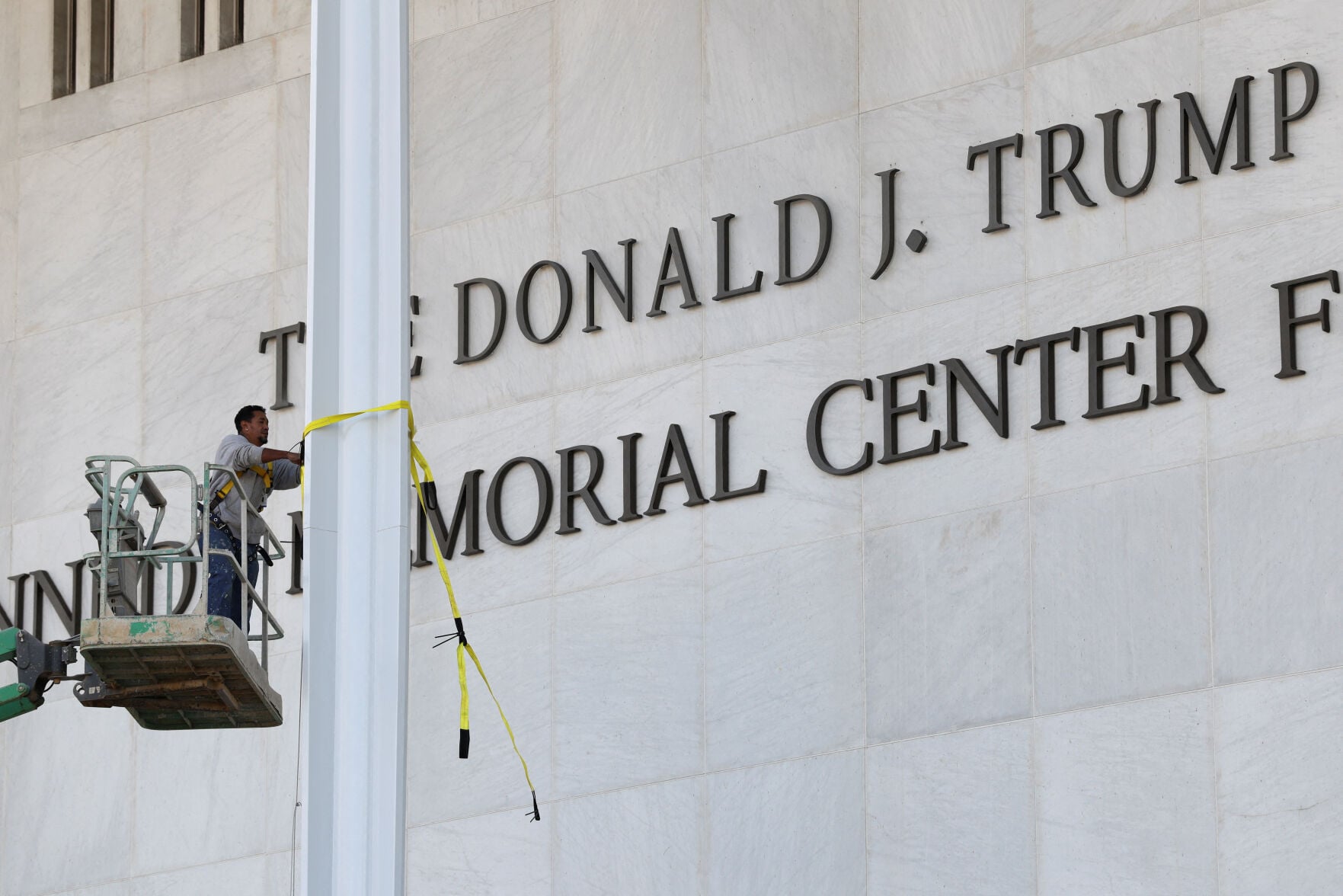
A judge has denied a request from the Kennedy Center to pause a ruling ordering President Donald Trump's name removed from building. That denial came Friday. U.S. District Judge Christopher Cooper ruled last month that Trump's name was illegally added to the iconic Washington performing arts facility. Cooper ruled only Congress could institute a change to the Kennedy Center's name and ordered references to Trump to be removed by Friday. Now he's refused the Kennedy's Center board's request to stay the ruling.
The Justice Department is pressing for the dismissal of preservationists' lawsuit over the planned $400 million White House ballroom after the shooting at Saturday's media gala. But its latest court filing reads more like a Truth Social post from President Donald Trump than a document crafted by government lawyers. The filing submitted Monday by the Justice Department is chock-full of the kind of Trumpian touches the president uses in written communication, such as erratic capitalization, exclamation points, non sequiturs, praise for the president and accusations his opponents are insane. The 16-page filing is a sign of the extraordinary degree to which the president has demolished the traditional wall of independence between the Justice Department and White House.
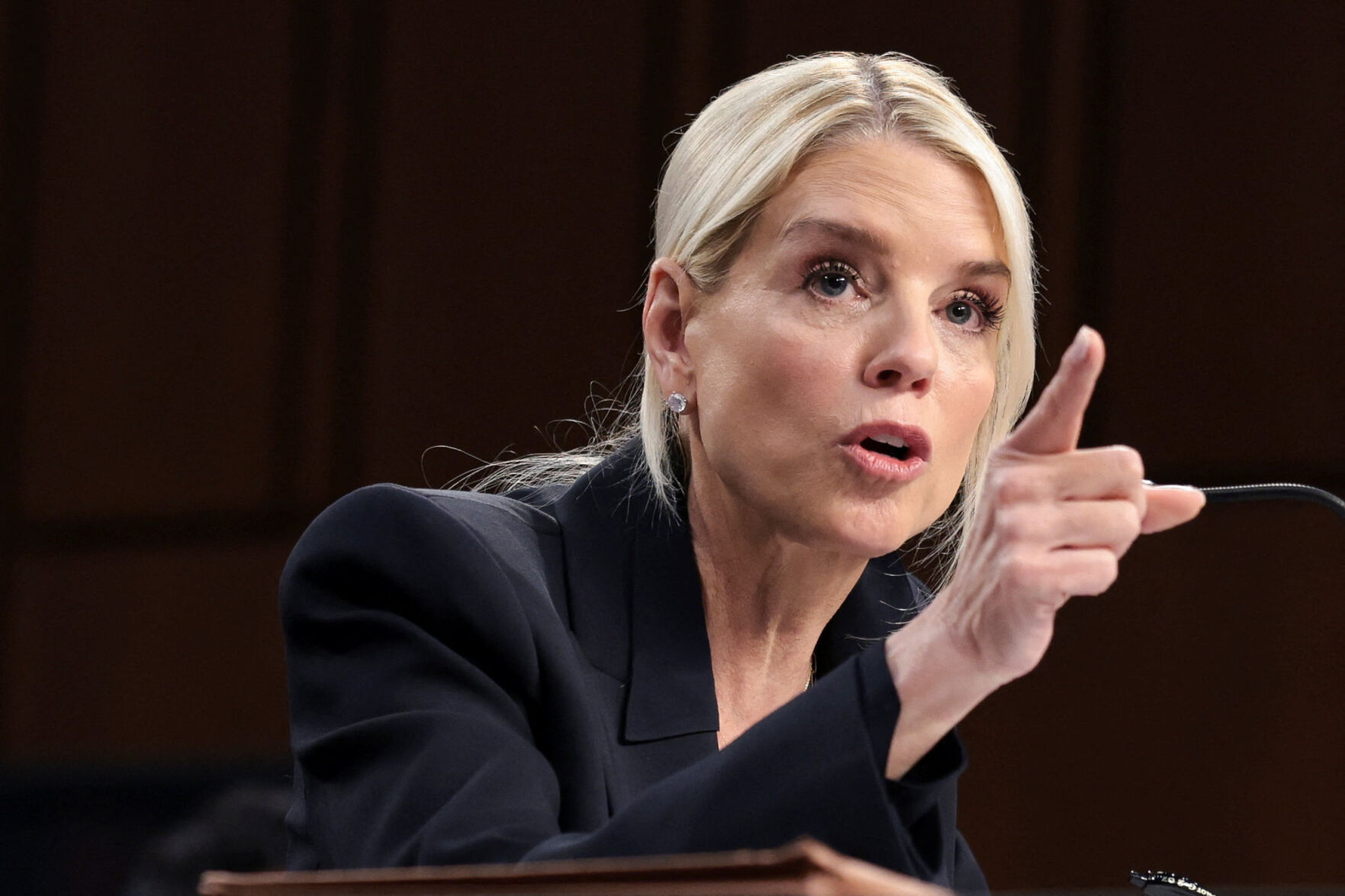
Attorney General Pam Bondi has been subpoenaed to answer questions from Congress about the Justice Department's sex trafficking investigation of Jeffrey Epstein and the agency's handling of millions of files related to the disgraced financier. Bondi was ordered Tuesday to appear for a deposition on April 14 by the Committee on Oversight and Government Reform after a vote earlier this month that was supported by five Republicans. The Justice Department's failure to fend off the subpoena from the Republican-led committee underscores widespread discontent among President Donald Trump's own base over Bondi's management of the review and release of a trove of documents from the criminal investigation into Epstein.
By CHARLOTTE KRAMON, ALEX VEIGA and MARY CLARE JALONICK Associated Press
In a rare bipartisan effort for a deeply divided Congress, the Senate has passed a broad bill to make U.S. housing more accessible and affordable. The bill passed on Thursday would reduce regulations, regulate corporate investors and expand how housing dollars can be used to build affordable homes and rentals. It now heads back to the House, which passed a separate version earlier this year. It is unclear whether President Donald Trump would sign it after declaring last weekend that he won't sign any new measures unless Congress passes legislation that would require voters to show proof of citizenship.