By MICHAEL R. SISAK, JOSH FUNK and JOHN SEEWER Associated Press
Federal investigators say a runway warning system didn't sound an alarm before an Air Canada jet and a fire truck collided at New York's LaGuardia Airport. The head of the National Transportation Safety Board said Tuesday that the system didn't work as intended because the fire truck did not have a transponder. The plane carrying more than 70 people slammed into the fire truck while landing late Sunday night. The two pilots were killed and several passengers were injured. But most were able to escape the mangled aircraft. Investigators don't know yet whether the two people in the fire truck heard the control tower's frantic, last-second warnings to stop before pulling into the plane's path.
Armed federal immigration officers in tactical gear moved through terminals at some of the busiest U.S. airports Monday, standing near security lines and checkpoints after President Donald Trump ordered their deployment during a partial government shutdown that has disrupted air travel nationwide. The officers weren't making arrests or screening passengers. The Trump administration vaguely said they would supplement Transportation Security Administration staffing at certain airports. But after a year of intensified immigration enforcement and protests in cities across the country, their appearance at airport checkpoints has unsettled some travelers and raised new questions about how far their presence might extend.
By JAKE OFFENHARTZ and JENNIFER PELTZ Associated Press
An Air Canada jet carrying more than 70 passengers collided with a fire truck while landing at New York's LaGuardia Airport, killing two pilots and injuring several others. Officials say the fire truck was crossing the tarmac late Sunday after being given permission to check on another plane reporting an odor onboard. Before the collision, an air traffic controller can be heard on airport communications frantically telling the fire truck to stop. The crash temporarily shut down LaGuardia — the New York region's third busiest hub — during what was already a messy time at U.S. airports. Transportation Secretary Sean Duffy says LaGuardia is "well-staffed" but still faces a shortage of air traffic controllers.
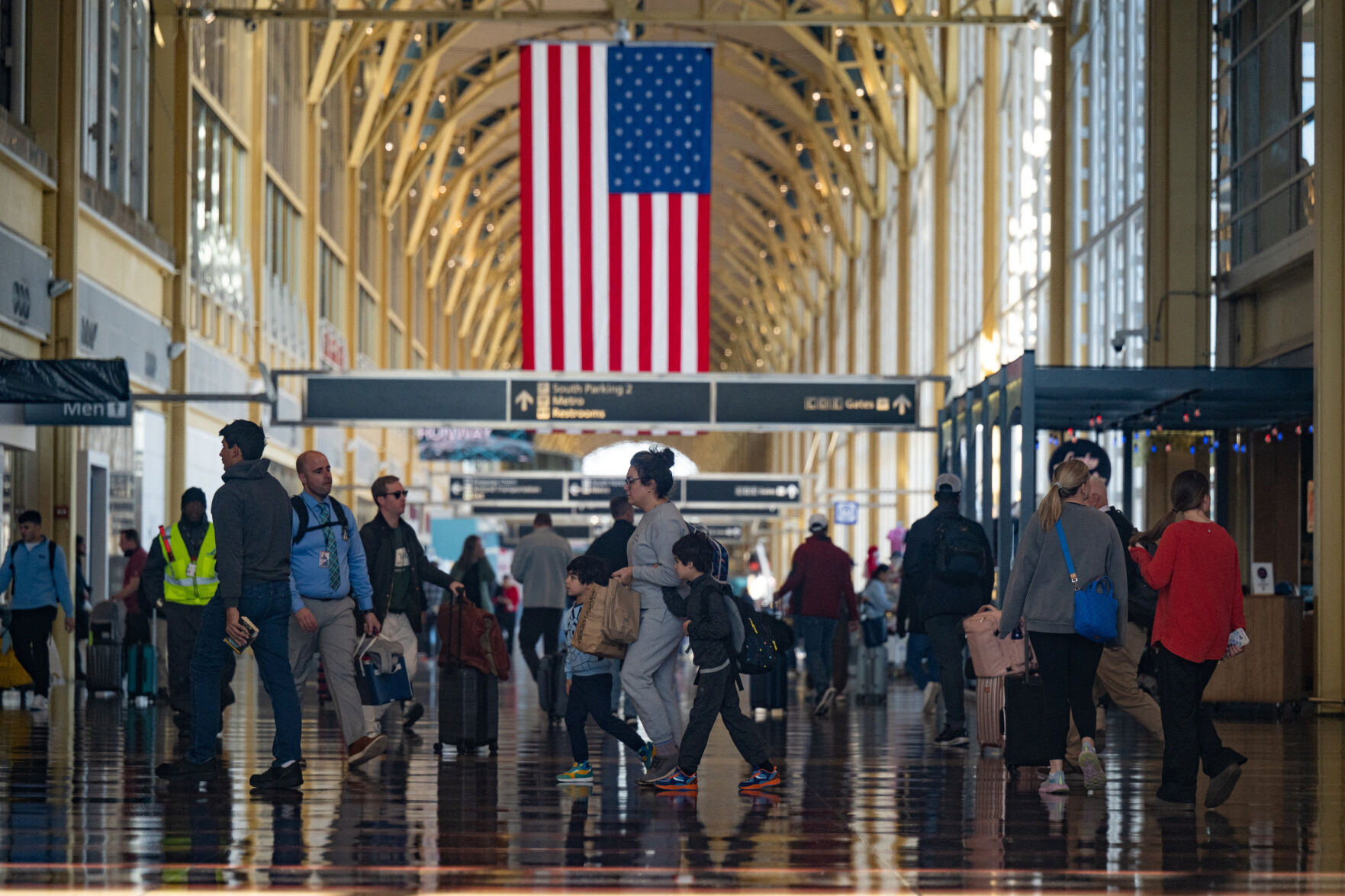
Storms sweeping across the eastern half of the country are disrupting air travel across the United States. FlightAware reported more than 3,500 flights canceled Monday and about 6,300 others delayed. The storms already dumped heavy snow across parts of the Midwest and were moving toward the East Coast with strong winds and the threat of tornadoes. The travel disruptions come during a busy period for airports, with spring break vacations and fans traveling for March Madness games. Meanwhile, a partial government shutdown affecting the Transportation Security Administration has stretched staffing at some airport security checkpoints, leading to longer lines in some places.
Travelers this Thanksgiving may still feel on edge after the historic government shutdown that caused widespread flight cancellations and delays. But experts say staying informed about weather, traffic, and airport wait times can help ease anxiety. The FAA is preparing for its busiest Thanksgiving in 15 years, with over 360,000 flights scheduled. And the TSA expects to screen more than 17.8 million people. Winter weather could impact major airports, so travelers should check forecasts regularly. Packing smartly and arriving early can also reduce stress. For road trips, AAA advises checking your car and avoiding peak traffic times.
By RIO YAMAT, JOSH FUNK and JOHN SEEWER Associated Press
Airlines have canceled over 9,000 flights across the U.S. since the Federal Aviation Administration ordered flight cuts late last week. The cuts aim to ease demands on short-staffed control towers during the federal government shutdown. On Tuesday, another 1,200 flights were canceled as the FAA increased its target for reducing flights at major airports. Flights are expected to remain disrupted even as the shutdown nears an end, and cancellations are unlikely to ease right away. The pace of airline ticket sales for Thanksgiving travel has slowed as more travelers have reconsidered whether to fly amid all the delays and cancellations.
Anxious travelers across the U.S. felt a bit of relief as airlines mostly stayed on schedule while gradually cutting flights because of the government shutdown. More than 800 flights were called off on Friday to comply with the Federal Aviation Administration's order to reduce service. Some passengers were forced make last-minute changes and rebook on different flights. Plenty of nervousness remained, as more canceled flights are expected in the coming days. Airports in Chicago, Atlanta, Denver and Dallas led the way with the most disruptions, and long security lines added to travelers' woes. The upheaval will intensify the longer the shutdown lasts and could become chaotic if it extends into the Thanksgiving holiday, just weeks from now.