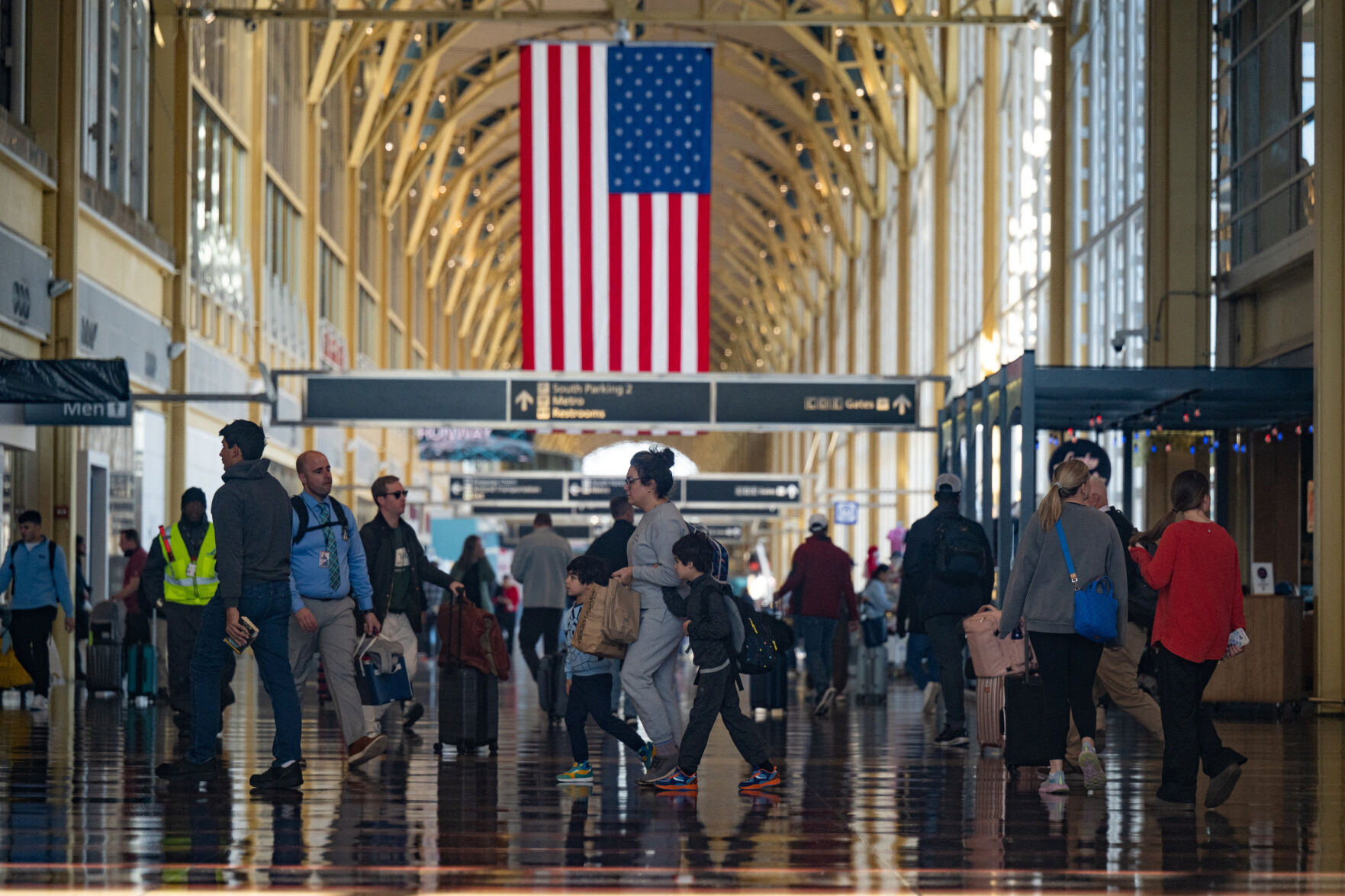
By MICHAEL R. SISAK, JOSH FUNK and JOHN SEEWER Associated Press
Federal investigators say a runway warning system didn't sound an alarm before an Air Canada jet and a fire truck collided at New York's LaGuardia Airport. The head of the National Transportation Safety Board said Tuesday that the system didn't work as intended because the fire truck did not have a transponder. The plane carrying more than 70 people slammed into the fire truck while landing late Sunday night. The two pilots were killed and several passengers were injured. But most were able to escape the mangled aircraft. Investigators don't know yet whether the two people in the fire truck heard the control tower's frantic, last-second warnings to stop before pulling into the plane's path.
By JAKE OFFENHARTZ and JENNIFER PELTZ Associated Press
An Air Canada jet carrying more than 70 passengers collided with a fire truck while landing at New York's LaGuardia Airport, killing two pilots and injuring several others. Officials say the fire truck was crossing the tarmac late Sunday after being given permission to check on another plane reporting an odor onboard. Before the collision, an air traffic controller can be heard on airport communications frantically telling the fire truck to stop. The crash temporarily shut down LaGuardia — the New York region's third busiest hub — during what was already a messy time at U.S. airports. Transportation Secretary Sean Duffy says LaGuardia is "well-staffed" but still faces a shortage of air traffic controllers.
By RIO YAMAT, JOSH FUNK and JOHN SEEWER Associated Press
Airlines have canceled over 9,000 flights across the U.S. since the Federal Aviation Administration ordered flight cuts late last week. The cuts aim to ease demands on short-staffed control towers during the federal government shutdown. On Tuesday, another 1,200 flights were canceled as the FAA increased its target for reducing flights at major airports. Flights are expected to remain disrupted even as the shutdown nears an end, and cancellations are unlikely to ease right away. The pace of airline ticket sales for Thanksgiving travel has slowed as more travelers have reconsidered whether to fly amid all the delays and cancellations.
Anxious travelers across the U.S. felt a bit of relief as airlines mostly stayed on schedule while gradually cutting flights because of the government shutdown. More than 800 flights were called off on Friday to comply with the Federal Aviation Administration's order to reduce service. Some passengers were forced make last-minute changes and rebook on different flights. Plenty of nervousness remained, as more canceled flights are expected in the coming days. Airports in Chicago, Atlanta, Denver and Dallas led the way with the most disruptions, and long security lines added to travelers' woes. The upheaval will intensify the longer the shutdown lasts and could become chaotic if it extends into the Thanksgiving holiday, just weeks from now.
Transportation Secretary Sean Duffy predicted Tuesday that there could be chaos in the skies next week if the government shutdown drags on and air traffic controllers miss a second paycheck. The FAA slows down or even stops flights temporarily anytime it is short on controllers or if there is an equipment problem. There have already been numerous delays at airports across the country — sometimes hours long — during the shutdown. Duffy warned that the situation will only get worse the longer the shutdown continues and the financial pressure continues to grow on people who are forced to work without pay. FAA employees already missed one paycheck on Oct. 28. Their next payday is scheduled for next Tuesday.
Continued staffing shortages in air traffic control facilities are causing delays at airports as the government shutdown nears the one-month mark. Controllers have been working without pay since the shutdown began on Oct. 1, and Transportation Secretary Sean Duffy has been warning that travelers will see more flights delayed or canceled the longer they go without a paycheck. The Federal Aviation Administration reported staffing-related delays on Friday at airports in Boston, Nashville, Houston, Dallas, and Newark, New Jersey. Most controllers are continuing to work mandatory overtime six days a week during the shutdown. Duffy says that leaves little time for a side job to help cover bills, mortgage and other expenses unless controllers call out.
Air traffic controllers are missing another paycheck due to the ongoing government shutdown, raising concerns about financial stress affecting their work. A number of isolated flight delays have been reported since the shutdown began as more controllers call out sick. The Federal Aviation Administration was already short on staff before the shutdown. Transportation Secretary Sean Duffy and the National Air Traffic Controllers Association President Nick Daniels emphasize the pressure on controllers. Some are taking second jobs to make ends meet. The shutdown is also hindering efforts to reduce the shortage of controllers. Though pressure is mounting on Congress, Democrats and Republicans have shown little sign of being able to reach a deal to fund the government.
By JOSH FUNK and RIO YAMAT AP Transportation and Airlines Writers
The federal government shutdown has entered its second week, and already shortages of air traffic controllers have strained operations and disrupted flights at some U.S. airports. The situation may well get worse if the shutdown continues and employees start to miss paychecks. And there is no way to predict what airports might have problems on any given day. So be sure to check your flight's status before you head to the airport. If your flight is canceled, airlines will rebook you on a later flight. If you no longer want to take the trip, you should be able to get a refund. But each airline's policies can differ, and airlines are not required to pay cash compensation.