By MARK SHERMAN, GEOFF MULVIHILL and MATTHEW PERRONE Associated Press
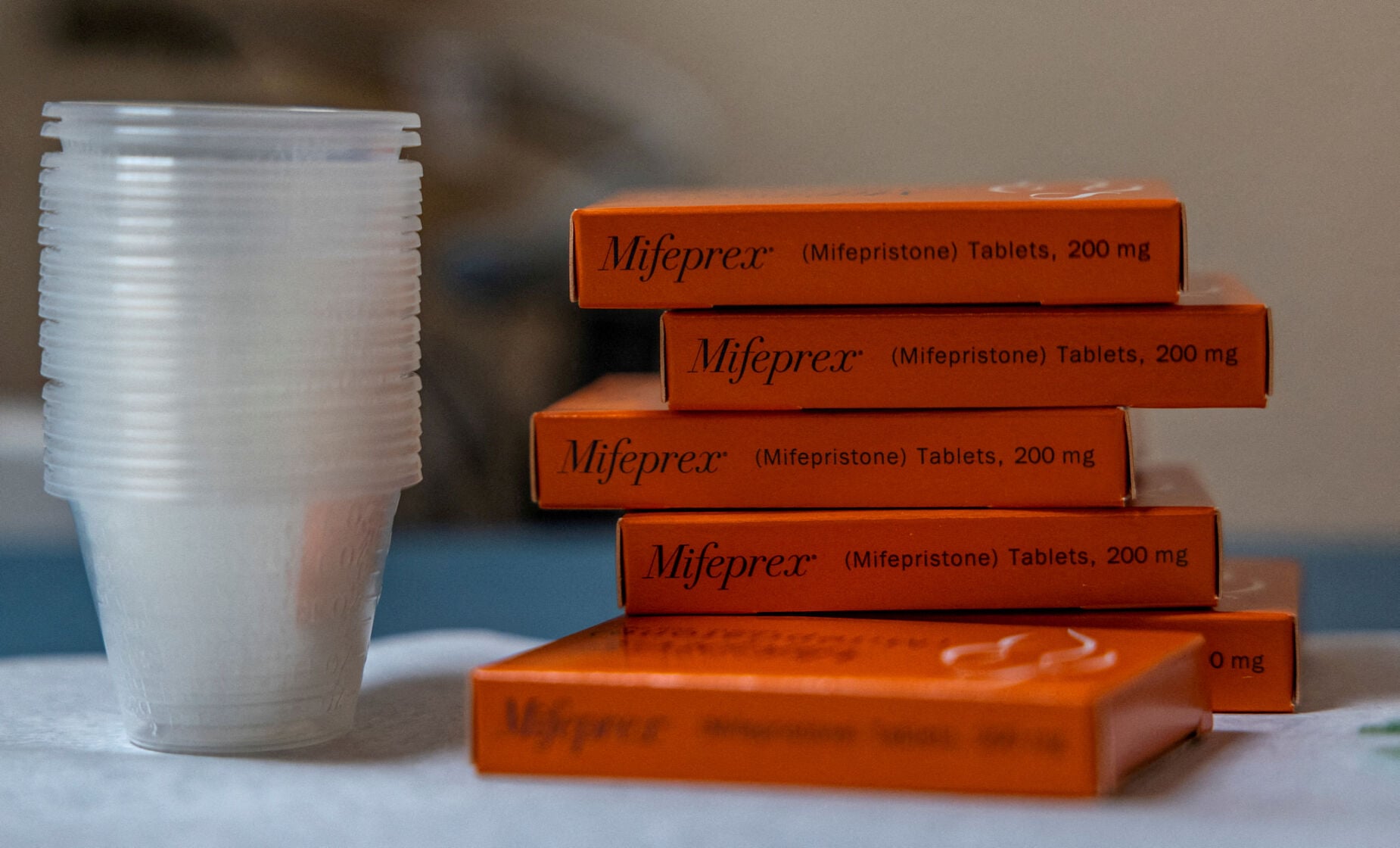
The Supreme Court is leaving women's access to a widely used abortion pill untouched until at least Thursday, while the justices consider whether to allow restrictions on the drug, mifepristone, to take effect. Justice Samuel Alito's order Monday allows women seeking abortions to continue obtaining the pill at pharmacies or through the mail, without an in-person visit to a doctor. It prevents restrictions on mifepristone imposed by a federal appeals court from taking effect for now. The court is dealing with its latest abortion controversy four years after its conservative majority overturned Roe v. Wade and allowed more than a dozen states to effectively ban abortion outright. Louisiana leads the current challenge.
By MARK SHERMAN and GEOFF MULVIHILL Associated Press
The Supreme Court has restored broad access to the abortion pill mifepristone, blocking a ruling that had threatened to upend one of the main ways abortion is provided across the nation. The order issued Monday allows women seeking abortions to obtain the pill at pharmacies or through the mail, without an in-person visit to a doctor. Those rules had been in effect for several years until a federal appeals court imposed new restrictions last week. Most abortions are obtained with medication, normally mifepristone and a second drug, misoprostol. The availability of those drugs has made abortion accessible to women in states with bans. Louisiana sued, saying mifepristone's availability undermined the ban there.
Vice President JD Vance is encouraging anti-abortion activists to celebrate progress in limiting abortion. Vance highlights the Trump administration's achievements, including expanding a ban on U.S. foreign aid for groups that support abortion services. Vance spoke Friday at the annual March for Life in Washington, emphasizing the importance of increasing birth rates in the U.S. The Republican vice president also praises the Supreme Court's 2022 decision overturning Roe v. Wade and President Donald Trump's leadership in appointing conservative jurists. The March for Life has become more celebratory since that Supreme Court ruling.
On Jan. 22, 1973, the U.S. Supreme Court, in its Roe v. Wade decision, declared a nationwide constitutional right to abortion. (The court would overturn Roe v. Wade in 2022, in the decision Dobbs v. Jackson Women's Health Organization.)
Federal health officials have approved another generic version of the abortion pill, prompting outrage from abortion opponents. Anti-abortion groups quickly criticized the move on Thursday, calling it a "stain" on the Trump administration. The groups have been pushing for a safety review of mifepristone. The FDA first approved the drug as safe and effective in 2000. The new version of the pill is from drugmaker Evita Solutions. It's not the first generic version, which the FDA approved in 2019.
Clinics, advocacy groups and individuals who share abortion-related content online say they are seeing informational posts being taken down even if the posts don't clearly violate the platforms' policies. The groups, in Latin America and the U.S., are denouncing what they see as censorship even in places where abortion is legal. Companies like Meta say their policies have not changed, and experts attribute the takedowns to over-enforcement. But abortion advocates say the removals have a chilling effect even if they are later reversed, and navigating platforms' complex systems of appeals is difficult, if not impossible.
A federal judge says Planned Parenthood clinics nationwide must continue to be reimbursed for Medicaid funding. The judged ruled Monday as the nation's largest abortion provider fights President Donald Trump's administration over efforts to defund the organization in his signature tax legislation. The new order replaces a previous edict that initially granted a preliminary injunction. That injunction specifically blocked the government from cutting Medicaid payments to Planned Parenthood members that didn't provide abortion care or didn't meet a threshold of at least $800,000 in Medicaid reimbursements in a given year.