After years of cities and communities across California sinking deeper into a statewide housing deficit, Sacramento lawmakers are shaping up one of the most comprehensive packages of legislation to address the affordability crisis.
Local legislators are hopeful ground can be gained in the battle that’s particularly poignant in San Mateo County where the geographically constrained Peninsula faces booming job growth.
The trio of proposed bills include a $4 billion housing bond, a quarter of which will go toward veterans; creating a new funding source for affordable housing by levying a $75 fee on most real estate transactions, which is expected to generate between $200 million and $300 million annually; and potentially easing development barriers in cities that aren’t building adequate housing.
Legislators are slated to vote on the package in the coming days, possibly Friday, Sept. 1, and while Democrats have a narrow supermajority in Sacramento, the two funding bills will require a steep two-thirds approval.
Local lawmakers this week expressed adamant support, and plan to cast their votes in favor of starting to tackle a notorious Bay Area struggle now felt across the state.
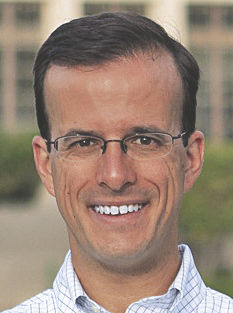
“All pun intended, this is a down payment on addressing the housing crisis that has developed over decades of not building enough housing to meet the demands of the jobs we’ve been creating,” said Assemblyman Marc Berman, D-Palo Alto. “The crisis has gotten so acute that it’s really getting attention statewide.”
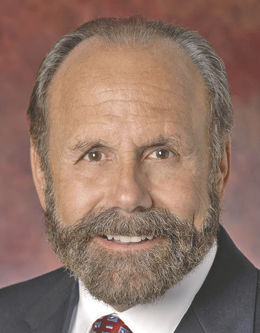
State Sen. Jerry Hill, D-San Mateo, said the momentum behind the deal announced earlier this week is telling as these new funding sources could result in hundreds of thousands of new homes.
“It certainly indicates and signifies that we’re in a crisis and that our constituents and the residents of California expect us to act,” Hill said, while adding it’s an aggressive package but “this is not a full solution, but a major partial solution that will provide roofs over many people’s heads.”
Trading local control for state dollars
But local representatives acknowledged there are tradeoffs to assuring Gov. Jerry Brown is also on board. The additional funds are tied to a proposal that would streamline the approval process for new residential developments in cities that aren’t meeting their state-issued housing targets.
Housing proponents and builders often point to an overly burdensome and costly regulatory system that’s curbing development potential. Plus, adding new homes can be controversial in many communities where residents believe high-density proposals rising up in their backyards will only further impact traffic, parking and school overcrowding issues.
Last year, the Legislature stalled on a housing package with Brown suggesting a one-time $400 million allocation in exchange for a new “by-right” proposal that would have stripped some local control to deny housing projects that comply with local zoning codes. This year, state Sen. Scott Weiner, D-San Francisco, authored Senate Bill 35 to fast track multi-family housing proposals in communities that haven’t hit their state Regional Housing Needs Assessment, or RHNA, targets. If approved, Senate Bill 35 would enable developers to receive ministerial approval if it meets a variety of standards including local zoning codes. The proposed rules would apply to many because few, if any, cities, and basically none in San Mateo County, have actually met all of their RHNA allocations for various income levels.
Assemblyman Kevin Mullin, D-South San Francisco, said while he couldn’t support Brown’s by-right proposal last year, this bill is a more modest version that comes with significant ongoing funding. State Sen. Toni Atkins, D-San Diego, is pushing a proposal to create a dedicated source of funding for affordable housing that’s estimated to generate a few hundred million dollars a year. About 70 percent would eventually go directly to local governments with the state controlling the rest.
“The key is [SB 35] is linked to ongoing revenue sources with the Atkins’ fee bill and the bond, $4 billion, is a significant investment in building affordable housing in the state. So the governor really wants the streamlining bill, I think the streamlining bill is necessary. But it really needs to be viewed in the context of a package proposal,” Mullin said.
Voters will have the final say on the $4 billion bond, which now includes $1 billion toward veterans housing programs. Senate Bill 3 seeks to put the housing bond on a statewide ballot and, along with Atkins’ proposal, needs two-thirds approval from the Legislature.
Although SB 35 is proving to be more controversial, Mullin said he anticipates it will pass more easily requiring just a simple majority vote in the Legislature.
Opposition remains on the streamlining bill, particularly amongst many city and county governments who fear it would strip local control and circumvent the public hearing process. The League of California Cities said it can’t support SB 35 unless significant changes are made, such as not holding cities accountable to RHNA allocations and the development market.
“Even if you’re a community that’s been very proactive with housing, you’re going to be held to a standard you can’t possibly control,” said the League’s Legislative Representative Jason Rhine.
Instead, the League has suggested a different set of standards and prefers other proposed legislation that also aims to ease barriers to development while still allowing for a more robust public and environmental review.
“We are supportive of having funding and streamlining plus regulatory reforms, we’re definitely supportive of that,” Rhine said, adding local governments are best equipped to make their own land use decisions rather than have blanket regulations statewide.
A few local cities, including Hillsborough and Daly City, have signed on to the League’s opposition.
Hill, who also served on the San Mateo County Board of Supervisors and San Mateo City Council before taking a seat in the state Senate, said he understands the concerns.
“Cities are not happy with this. … It’s another example of the state pre-empting them on another issue,” Hill said. “But I think it’s important that we look at this from a regional and a state perspective because the problem crosses city lines and the actions of one city can certainly impact and affect other cities and areas of a region.”
But in some ways the state has tied local governments’ hands having stripped them of an annual $1 billion funding source with the loss of redevelopment agencies, Rhine said.
“It’s very, very difficult to get affordable housing in communities without some sort of state assistance,” Rhine said.
The legislative package is a far cry from replacing what’s been lost, particularly when it comes to the means to finance very costly affordable housing developments. The San Mateo County Democrats have long noted the region’s struggles were exacerbated after Brown in 2012 dissolved the long-standing agencies that allowed local governments to siphon off property taxes to fund affordable housing. Mullin said he’s excited by the legislative package, but knows it is not a substitute.
“I personally want to continue to push for the restoration of redevelopment agencies in the state. Redevelopment agencies were the single-largest source of funding for affordable housing,” Mullin said, while acknowledging it may take a change in Sacramento to achieve. “We still have some work to do in 2018 and with the next governor.”
But in the meantime, those working to represent the jobs-rich and housing-poor Bay Area point to the politics behind making progress.
“It’s part of the compromise,” Berman said. “The governor has made it clear he will not support additional funding for a process he feels is broken and, given the powerful veto pen he wields, that’s just the reality of the situation we’re [working] in.”
Twitter: @samantha_weigel
Note to readers: This article has been corrected. A prior version incorrectly indicated the town of Hillsborough had not met its RHNA allocations, however it has met its RHNA housing goals as of 2014. We apologize for the error.









(9) comments
For the liberal crew, the answer to all problems is to raise taxes, increase fees or go into more debt. This proposal is a combination of fees/debt. Well, for the Jerry Hill fans out there, this is red meat. But for responsible voters - hang onto your wallets.
yada yada yada. let the free market decide! Govv't created this mess by trying to micromanaging every aspect of our lives including social issues. Now they want another "fee". Kalifornia. Oh, and they think emperor Brown will be on board with, duh. My party has never seen a tax it didn't like. For every action, their is an equal reaction and the reaction will mean a net higher cost to everyone else. Look at food subsidies. If you graph the price of food items and the increase in food stamps, the two follow each other in parallel. I guess you college educated people out there were never taught the basics, just specifics.
We're so lucky to have this kind of leadership in San Mateo County.
Hope they come to compromise…of any sorts that they will all agree & sign
First step was needed years ago and already at the tipping point
Tipping point is that those who complained and voted against any new bedrooms for the Peninsula are now complaining about the cost of everything to do with ‘The Service Sector’…which is most of the people working on the Peninsula.
My clients have been forced to offer and are also forced to increase their hiring bonuses. Factored by many refusing to move here from out of state….which has two clients opening new campuses out of state…that includes a potential of employee bedrooms at a discount
Folks…it is a system and the focus only on growth of jobs without the rest of the system of life has put us out of kilter…and that will cost more than money can pay for in the long run…
Ben...with over 2000 residential units either built and/or approved in the City of San Mateo over the past few years...you can't say that your so-called complainers have had much influence in stopping development....and maybe they are complaining because the companies you seem to represent haven't paid their fair share of the costs to mitigate for those 2000+ residences...
Yes knew all that...but mostly upper end bedrooms...vs how many service sector (affordable) bedrooms ?
Also, yes know we are land locked...part of why our dirt is so expensive...the reason we need higher density, in our designated high density areas (not R1 areas).
Same thing for TOD, as these are all inter-related. Plus TOD has been around since BEFORE the advent of automotive and the best cities to live in today were mostly all architected BEFORE the advent of automotive....they are all of high density back then and continue to be today...and...not segregated communities, but integrated communities where folks can walk to, bicycle to, or take public transit to schools, work, shop, eat, etc...of which "Form Based Code" planning is all about...as is our San Mateo Sustainable Streets Plan (is our Vision Zero plan). These (Form Based Code and Vision Zero) go hand in hand in making or architecting a better city
Posted this in editor's opinion piece and should have likewise here on this thread/topic...as they are inter-related...more so in that these two are a cause and effect in either direction you look at them...meaning by more bedrooms (the whole range, not just one sector thereof) closer to the jobs can/will reduce traffic congestion...
Anyone check out what is happening in San Carlos along the rail road station ? New high density bedrooms same being built…with more in the pipe
This all goes to my three root causes. Simplistic in a way, but that is the root cause among the other root causes.
#1….Over population and will never solve that in my life time
#2….Dissociation of location between jobs vs bedrooms..so they have to commute between them
#3….Public Transit system isn’t good enough. This includes our roadways. If it was good enough, folks would NOT NEED to commute via auto’s. They could take public transit and could live even farther away…to take HSR from Tahoe to the Peninsula.
Interesting fact…MTC by accident found and coined/named a study of theirs. Even started a program, but have not heard anything about is since finding it. This to me, indicative of how just increasing the numbers of ‘new’ bedrooms (of the right kind) on the Peninsula can make a HUGE impact on commute traffic/congestion. As a small percentage of folks who get Columbus day off…has a drop in commute traffic of about 50%-70%
They call it “Make Every Day Columbus Day: Active Operational Management” and here are the links :
http://bayareamonitor.org/the-congestion-conundrum/
http://www.itscalifornia.org/Content/AnnualMeetings/2015/Presentations/TS11-3-MTC-ITSProgramGenerateRevenue.pdf Page 8 shows that congestion on I-80 & US-101 drops 50%-70% on that Columbus Day Holiday weekend and ZERO congestion during a Labor Day Holiday where more folks have it off than Columbus Day
Roughly 75 percent of all the land in the Bay Area is either permanently protected in parks or open space ...The Bay Area almost certainly has more parks, farmland, beaches and other open spaces than any other major urban area in the United States. That's the product of 100 years of advocacy by park lovers, hikers and environmental groups.....http://www.mercurynews.com/ci_20685004/bay-area-open-space-more-it-is-being....
The Peninsula Open Space Trust alone owns some thing like a third of San Mateo County....just saying with all of the above we're infighting for the remaining crumbs....
“Cities are not happy with this. … It’s another example of the state pre-empting them..."
The problem is that most cities (especially in the Bay Area) are not doing their part to alleviate the housing shortage. They want more commercial development, but reject housing. Brisbane is a perfect example of why we need this law.
Welcome to the discussion.
Log In
Keep the discussion civilized. Absolutely NO personal attacks or insults directed toward writers, nor others who make comments.
Keep it clean. Please avoid obscene, vulgar, lewd, racist or sexually-oriented language.
Don't threaten. Threats of harming another person will not be tolerated.
Be truthful. Don't knowingly lie about anyone or anything.
Be proactive. Use the 'Report' link on each comment to let us know of abusive posts.
PLEASE TURN OFF YOUR CAPS LOCK.
Anyone violating these rules will be issued a warning. After the warning, comment privileges can be revoked.