A mix of clouds and sun, with gusty winds developing this afternoon. High 62F. Winds WNW at 20 to 30 mph. Higher wind gusts possible..
Tonight
Partly cloudy and windy this evening. Cloudy with diminishing winds late. Low 51F. WNW winds at 20 to 30 mph, decreasing to 5 to 10 mph. Higher wind gusts possible.
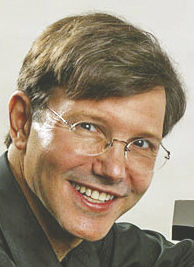
Rob Kapilow is the best presenter of classical music appreciation around today.
Most speakers on this theme tend to purvey biographical anecdotes and psychoanalytic surmises about the composers, as if the music should provide insight into the composer instead of the other way around. But Kapilow is genuinely interested in the music for itself. His “What Makes It Great?” programs address works that seem simple and straightforward, finding the hidden tricks of technique that make them not routine, but great.
On Wednesday, Oct. 11, Kapilow applied his method to Antonín Dvorák’s “American” String Quartet at Stanford’s Bing Concert Hall. Kapilow gave a one-hour talk, going through the piece with musical illustrations from himself at a Yamaha keyboard or from the St. Lawrence Quartet seated by him. Then, after intermission, the St. Lawrence played the entire work without interruption or commentary, enabling the audience to hear those points in their full context. It was an intense and tightly wrought performance.
As Kapilow explained, Dvorák had found inspiration in his own Czech folk culture. Spending three years in the United States in the 1890s to teach composition, he tried in his own work to teach by example for American composers to be inspired by the spirit of American sources: African-American spirituals, native birdsong and so forth. But Kapilow did not discuss the results of this teaching (it didn’t work very well, actually) or much of the specifics of Dvorák’s sources.
Recommended for you
Instead, Kapilow’s focus was entirely on the internal content of the “American” Quartet’s composition, the little tricks of advanced technique that lift this music from the ordinary to the extraordinary. Kapilow spoke to a general, non-technical audience, but did so intelligently. He used few technical terms beyond “major,” “minor,” and “cadence.” He alluded to key relationships but did not go into details. His interest was in the development and mutation of phrases and rhythms.
The theme was the creation of a complex pattern or texture from something simple. Kapilow would take Dvorák’s texture apart and have the musicians play each part separately, then add them together so the whole could be heard as the sum of its components. He would illustrate the genius of some feature by having the musicians play a notional “boring” version to contrast with the actual one. For instance, the quartet begins with two bars of vamping with the instruments coming in separately. Here, the “boring” version was having them all begin together. He would show the mutation of a motive by taking it apart, playing it over and contrasting it with the mutated version. Thus, he revealed that the theme of the trio is that of the scherzo, slowed down and changed from major to minor.
This was actually very interesting. Kapilow speaks quickly and passionately, generating involvement by sheer enthusiasm. He is skilled at involving the audience, asking us questions, having us sing motives or clap rhythms to show how they’re built up and mutated. He tried to keep from getting too complex and would often stop himself and explain differently. He kept going with the serene confidence that comes from sure knowledge and, more importantly, deep understanding of his topic.
Dvorák once said that he would never have written his American works, including this quartet and the “Symphony from the New World,” the way he did were it not for his experiences here, especially his summers in a Czech settlement in Iowa. Kapilow quoted this, describing it as a key understanding. But it would have taken another lecture as long as this one to describe what’s American about this music or how it differs from Dvorák’s Czech music.
A clue as to what’s American about American music will have to emerge from combining this with the two other talks Kapilow is giving at Bing this season: on Leonard Bernstein’s theatrical songs Feb. 7 and Duke Ellington’s jazz April 11. They should be illuminating.
Keep the discussion civilized. Absolutely NO
personal attacks or insults directed toward writers, nor others who
make comments. Keep it clean. Please avoid obscene, vulgar, lewd,
racist or sexually-oriented language. Don't threaten. Threats of harming another
person will not be tolerated. Be truthful. Don't knowingly lie about anyone
or anything. Be proactive. Use the 'Report' link on
each comment to let us know of abusive posts. PLEASE TURN OFF YOUR CAPS LOCK. Anyone violating these rules will be issued a
warning. After the warning, comment privileges can be
revoked.
Please purchase a Premium Subscription to continue reading.
To continue, please log in, or sign up for a new account.
We offer one free story view per month. If you register for an account, you will get two additional story views. After those three total views, we ask that you support us with a subscription.
A subscription to our digital content is so much more than just access to our valuable content. It means you’re helping to support a local community institution that has, from its very start, supported the betterment of our society. Thank you very much!









(0) comments
Welcome to the discussion.
Log In
Keep the discussion civilized. Absolutely NO personal attacks or insults directed toward writers, nor others who make comments.
Keep it clean. Please avoid obscene, vulgar, lewd, racist or sexually-oriented language.
Don't threaten. Threats of harming another person will not be tolerated.
Be truthful. Don't knowingly lie about anyone or anything.
Be proactive. Use the 'Report' link on each comment to let us know of abusive posts.
PLEASE TURN OFF YOUR CAPS LOCK.
Anyone violating these rules will be issued a warning. After the warning, comment privileges can be revoked.